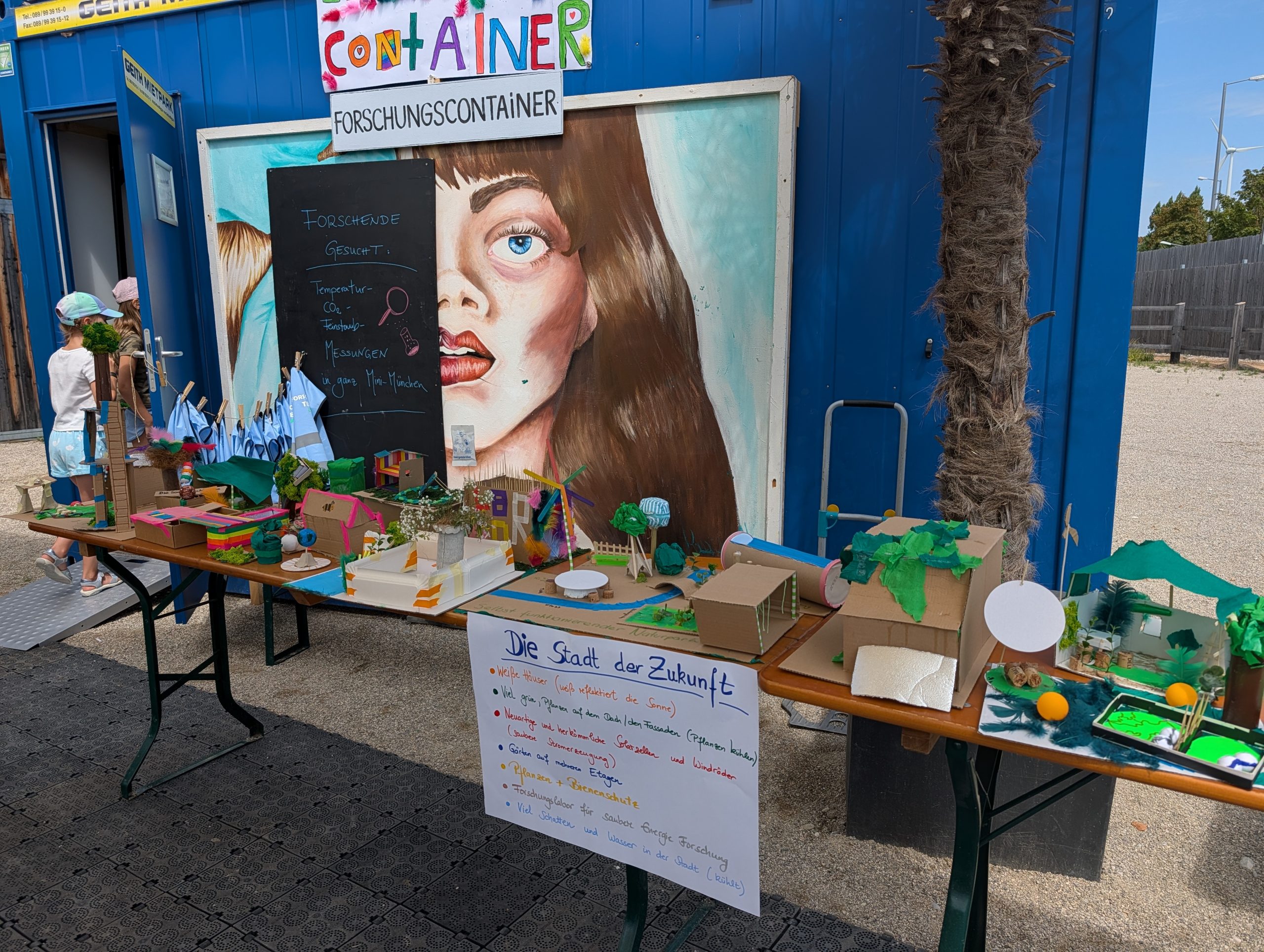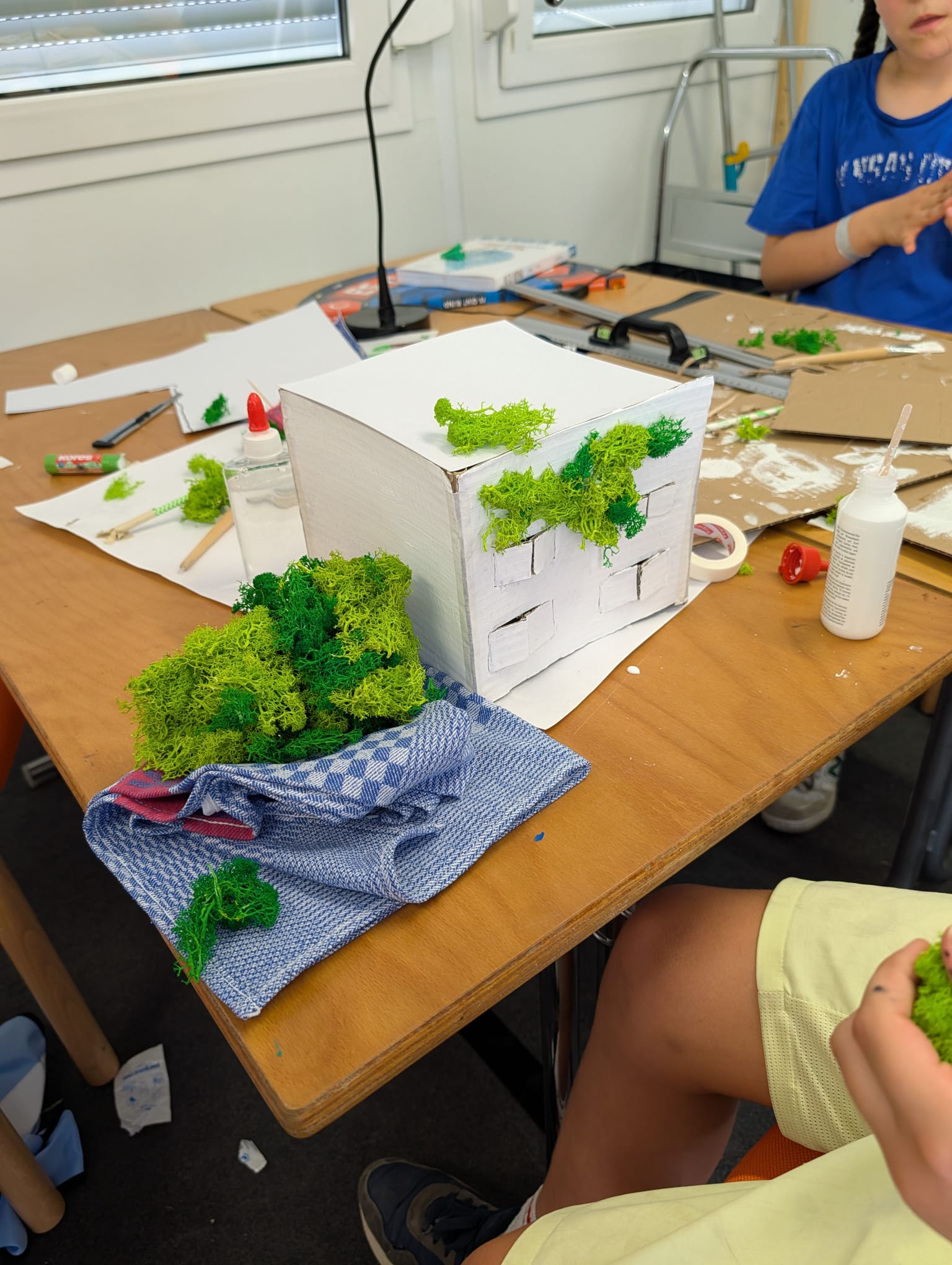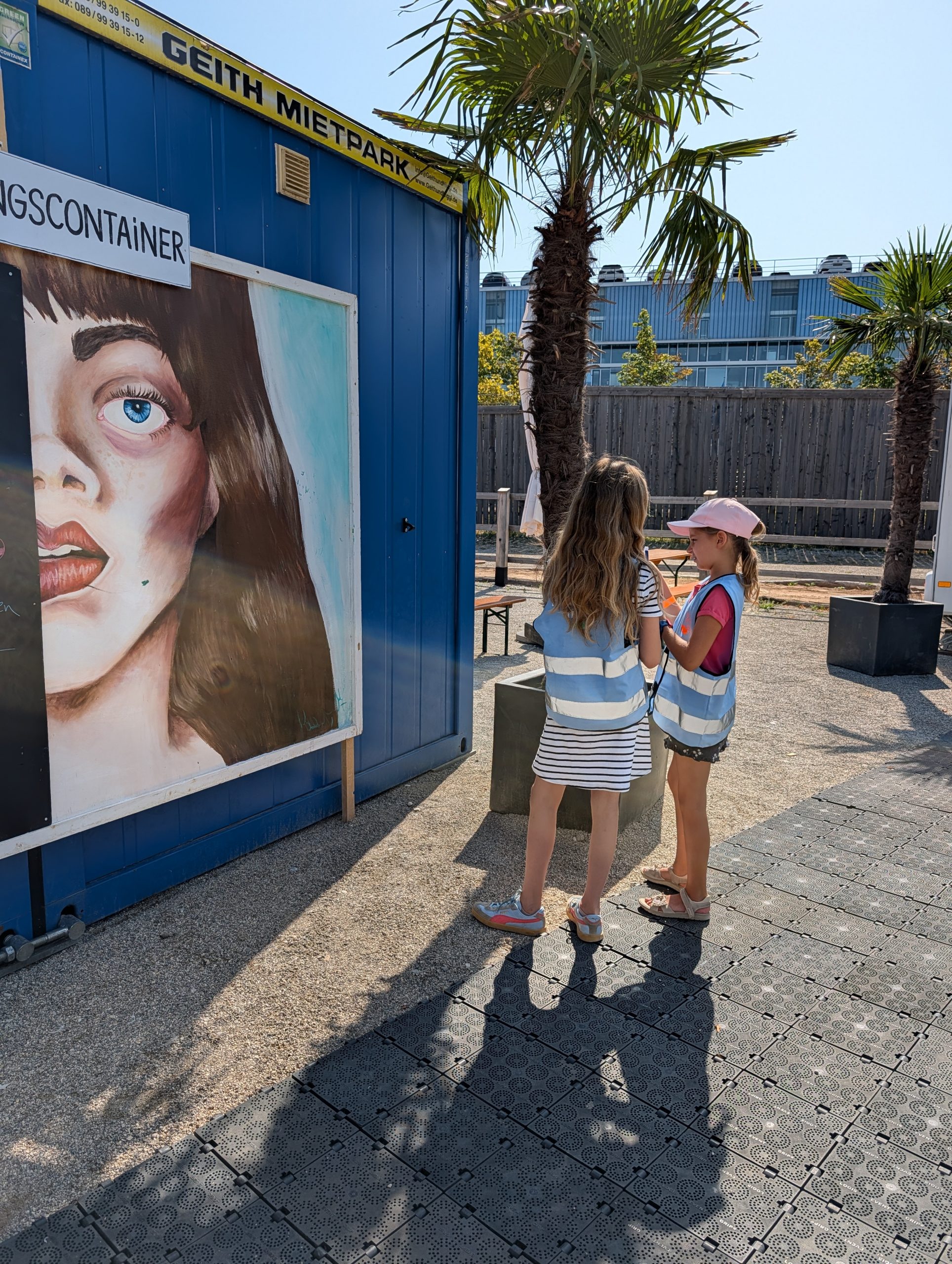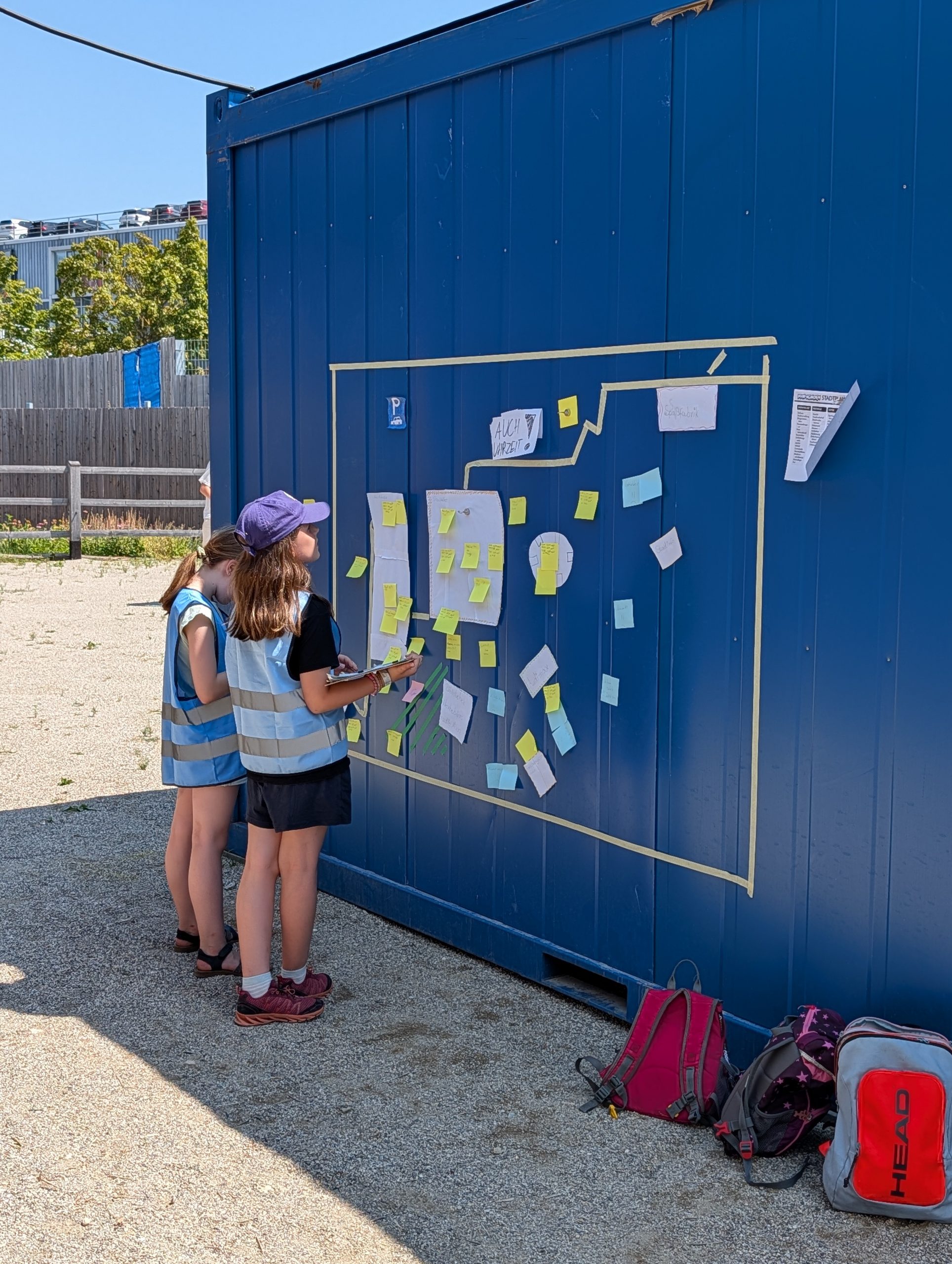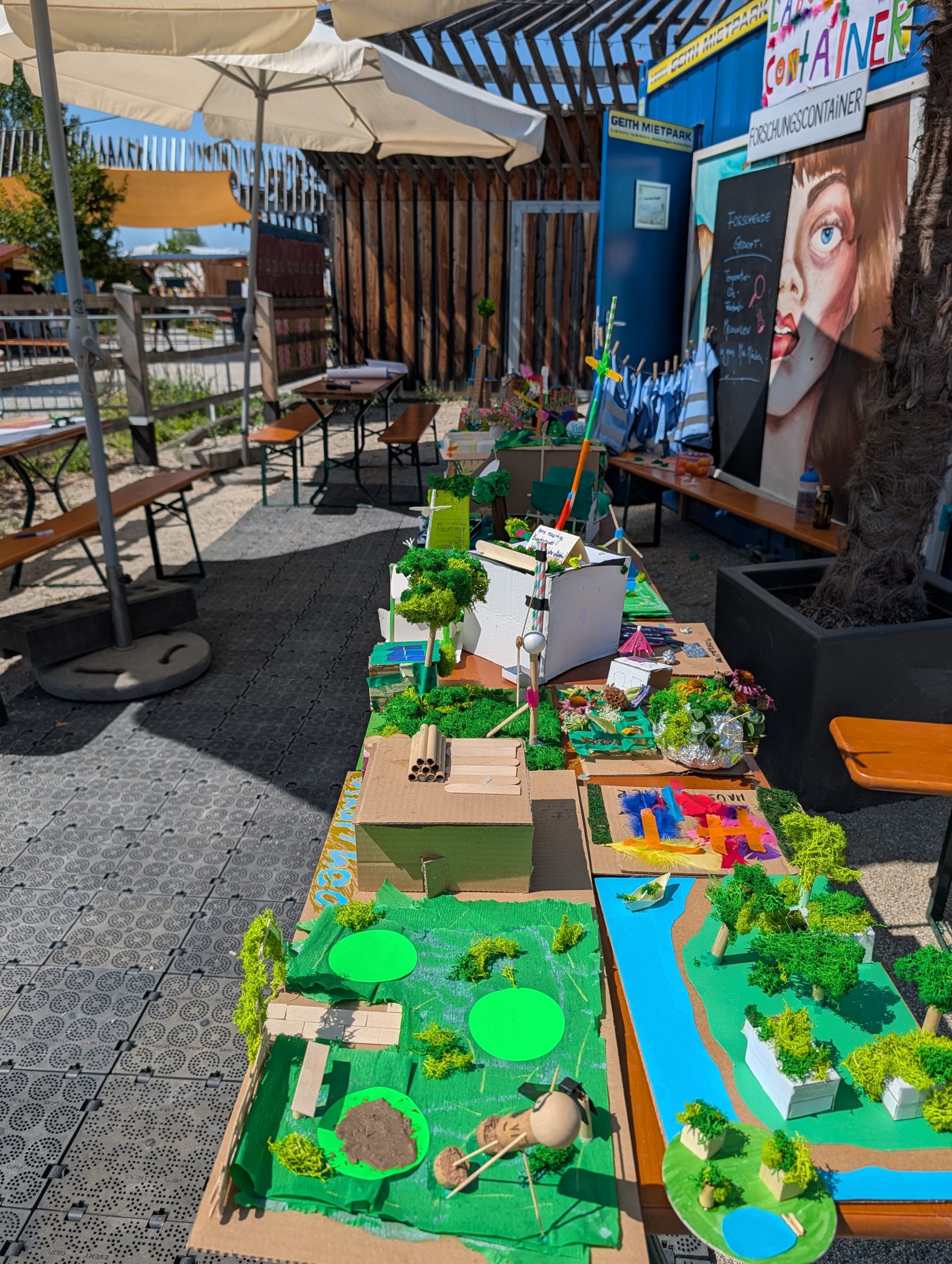

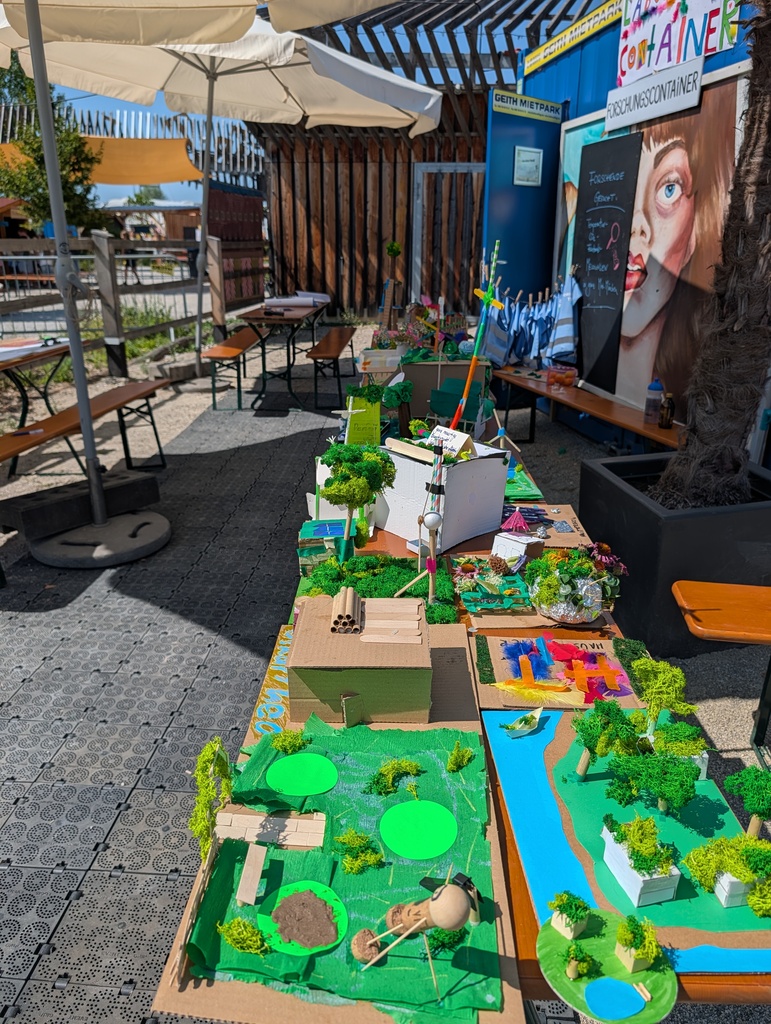
What will the city of the future look like? Thanks to their temperature measurements, the researchers in Mini-Munich learned that white surfaces and green plants do not radiate much heat, and that water cools the surrounding area. So they added green roofs and, in some cases, green facades to their models and planned for wind turbines and solar panels. (Photo: S. Mayerl / e-conversion)
How can a city prepare for the impacts of climate change? During the first week of the “Mini-Munich” model city, numerous young residents explored this question. In cooperation with the e-conversion Cluster of Excellence, the Deutsches Museum created an interactive research program that turned children into climate and energy researchers themselves.
Mini-Munich is much more than a holiday program: Since 1979, a city created by and for children has been built every two years during the summer holidays and lasts for three weeks. In 2026, Mini-Munich is taking place from 3 to 21 August on the Showpalast grounds in Fröttmaning. Every day, up to 2,000 children and young people aged 9 to 15 can take part in the city community by working, studying, earning money, producing goods, getting involved in politics, and helping shape the city. More than 40 partners from business, culture, public administration, media, crafts and science are involved. What makes Mini-Munich special is that children take on responsibility themselves. Those who register at the city’s registration office become citizens of the model city and can choose their own activities. For every hour of work, they earn five MiMü, the city’s own currency – one MiMü is withheld as a city tax. Just like in a real city, Mini-Munich also has rules, institutions and political decision-making processes. In this way, children experience first-hand how an urban community works and how its different areas are interconnected.
Temperature map and heat protection plan for Mini-Munich
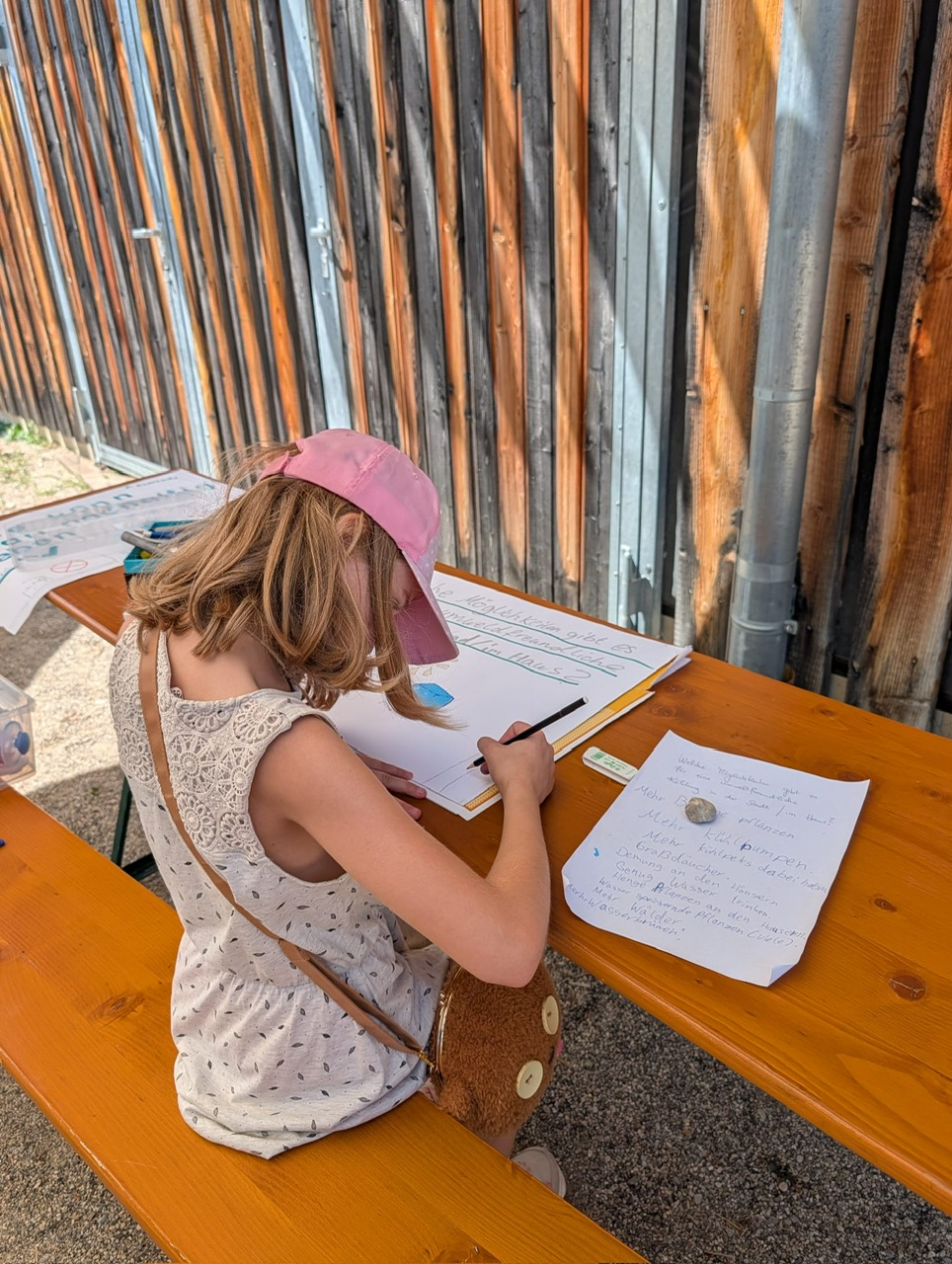
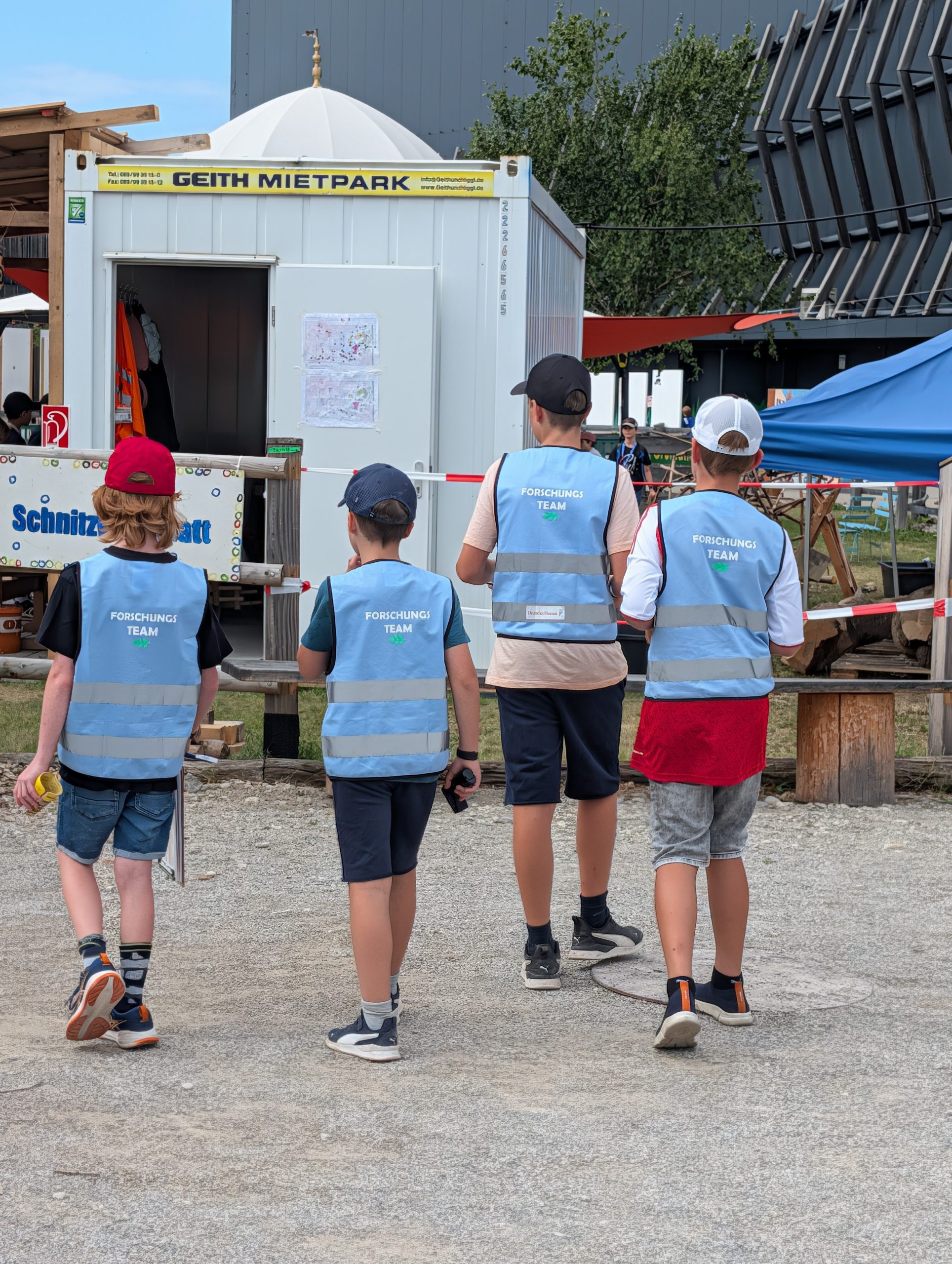
This is exactly where the research program developed by the Deutsches Museum and e-conversion came in. At its heart was a dedicated research container. After officially being “employed” as young researchers, the children equipped themselves with infrared thermometers and set out across the entire Mini-Munich site. Their task was to systematically measure, compare and document surface temperatures. The individual measurements were used to create a temperature map of Mini-Munich. This allowed the young researchers to investigate for themselves which areas of the city became particularly hot and where differences could be observed. Their measurements then provided the basis for the next question: How can a city be designed to better cope with heat and the impacts of climate change? The participants were then asked to develop their own ideas for a heat-resilient and sustainable city. They explored the benefits of solar energy, learned the basics of soldering and built their own solar panels. They also created numerous informative posters on topics such as heat protection, green urban design and renewable energy.
Scientific data collection thus became the starting point for concrete urban planning and future ideas. The concept fits perfectly with the idea behind Mini-Munich. The model city sees itself as a model for social learning: Rather than being taught how urban life works, children experience it themselves by taking on meaningful roles. They decide independently which activities to pursue, which opportunities to use, and how long they want to stay. This open, educational, and experiential program connects learning directly with hands-on participation and personal experience. And with temperatures soaring in the middle of summer, climate and energy research was a particularly fitting addition to the city’s diverse life.
The results of the Mini-Munich researchers will be on exhibit during Munich Climate Week at the Science Communication Lab in the Deutsches Museum from October 23–25, 2026.
Impressions from Mini-Munich