

What will the energy future sound like? And what do music and advanced materials have in common? Jennifer Rupp, Professor of Electrochemical Materials at the Technical University of Munich and spokesperson of the e-conversion Cluster of Excellence, and the Drum & Bow ensemble of the Munich Symphony Orchestra – comprising a string quartet and percussion – explored this unexpected connection on 18 November. With the first edition (Studiosound I), the new event series launched by the Deutsches Museum and the Munich Symphony Orchestra, the two institutions are exploring new territory at the intersection of science and music.
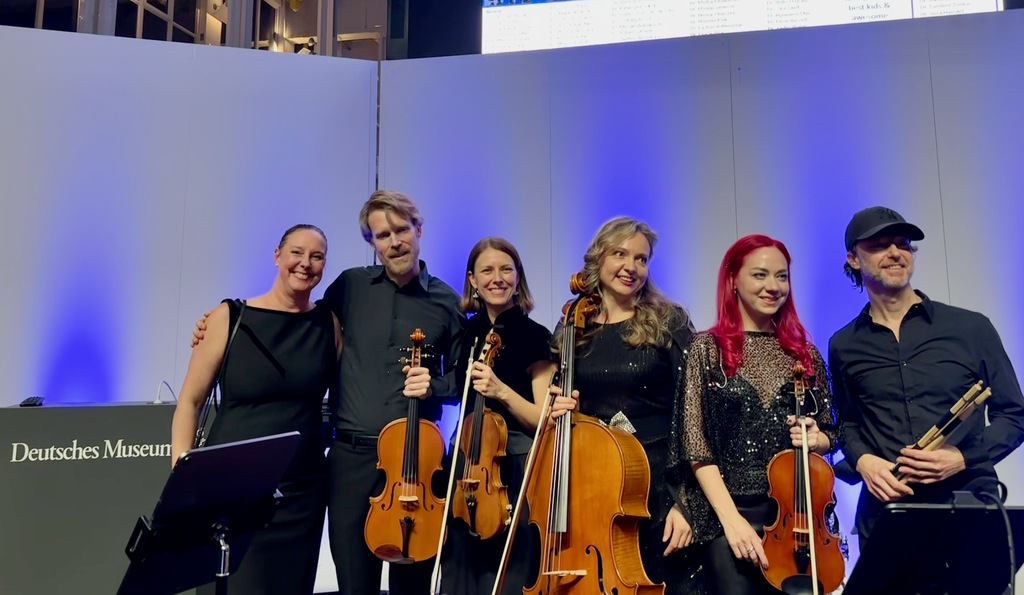
Jennifer Rupp (left) joins the Drum & Bow ensemble of the Munich Symphony Orchestra for the evening. (Photo: C. Zörlein / e-conversion)
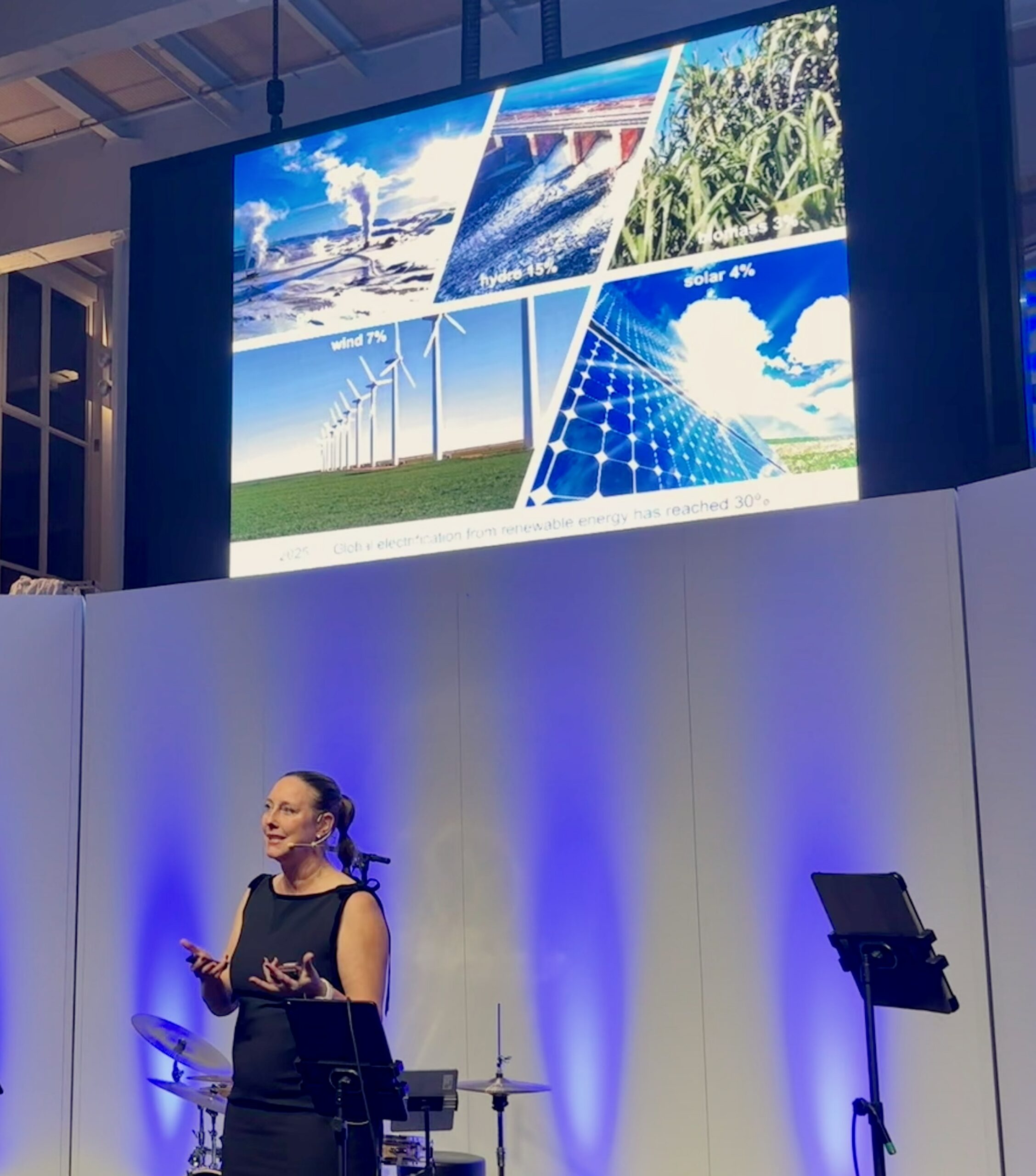
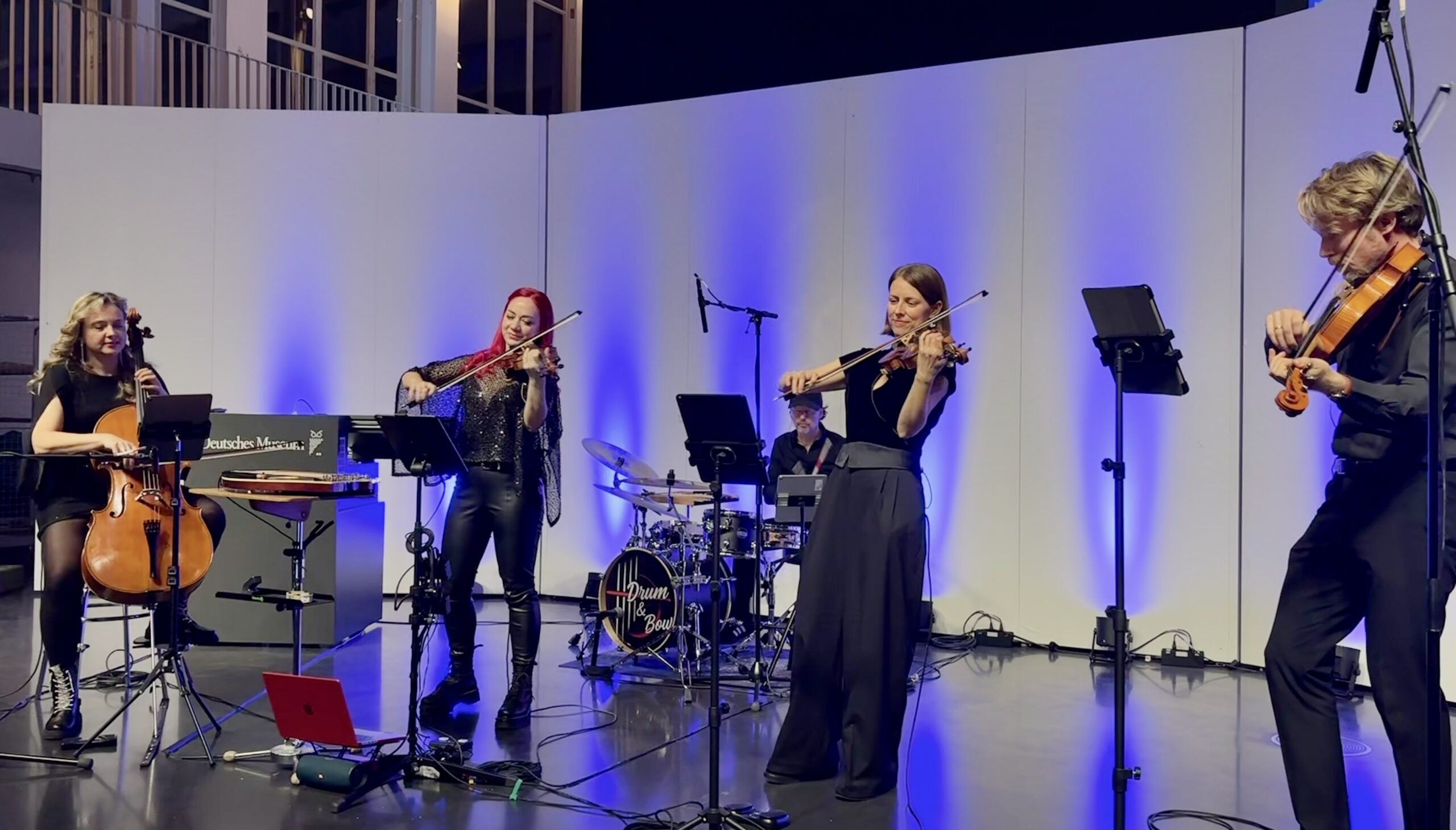
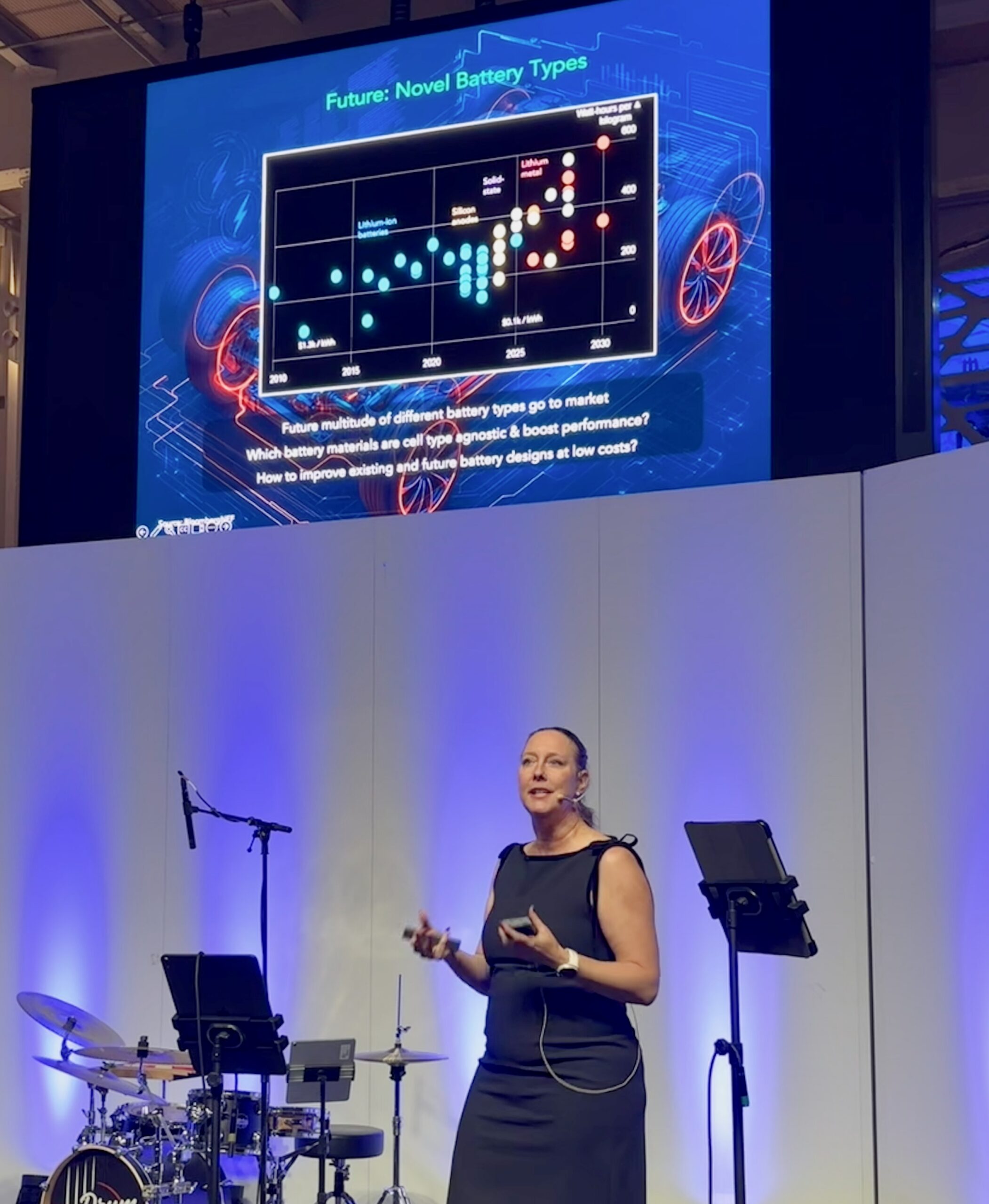
Guided tours of the chemistry and musical instrument collections already set the stage for an evening that brought seemingly different worlds together. Drum & Bow opened the programme with the monumental film score from 2001: A Space Odyssey and the soundscapes of Interstellar. Jennifer Rupp then took the audience on a journey into the energy technologies of the future. Global electrification based on renewable energy is advancing rapidly, with renewable sources now accounting for around 30 percent of electricity generated worldwide. This is driving a growing demand for innovative energy storage technologies and materials – including solid-state batteries.
What music and materials have in common
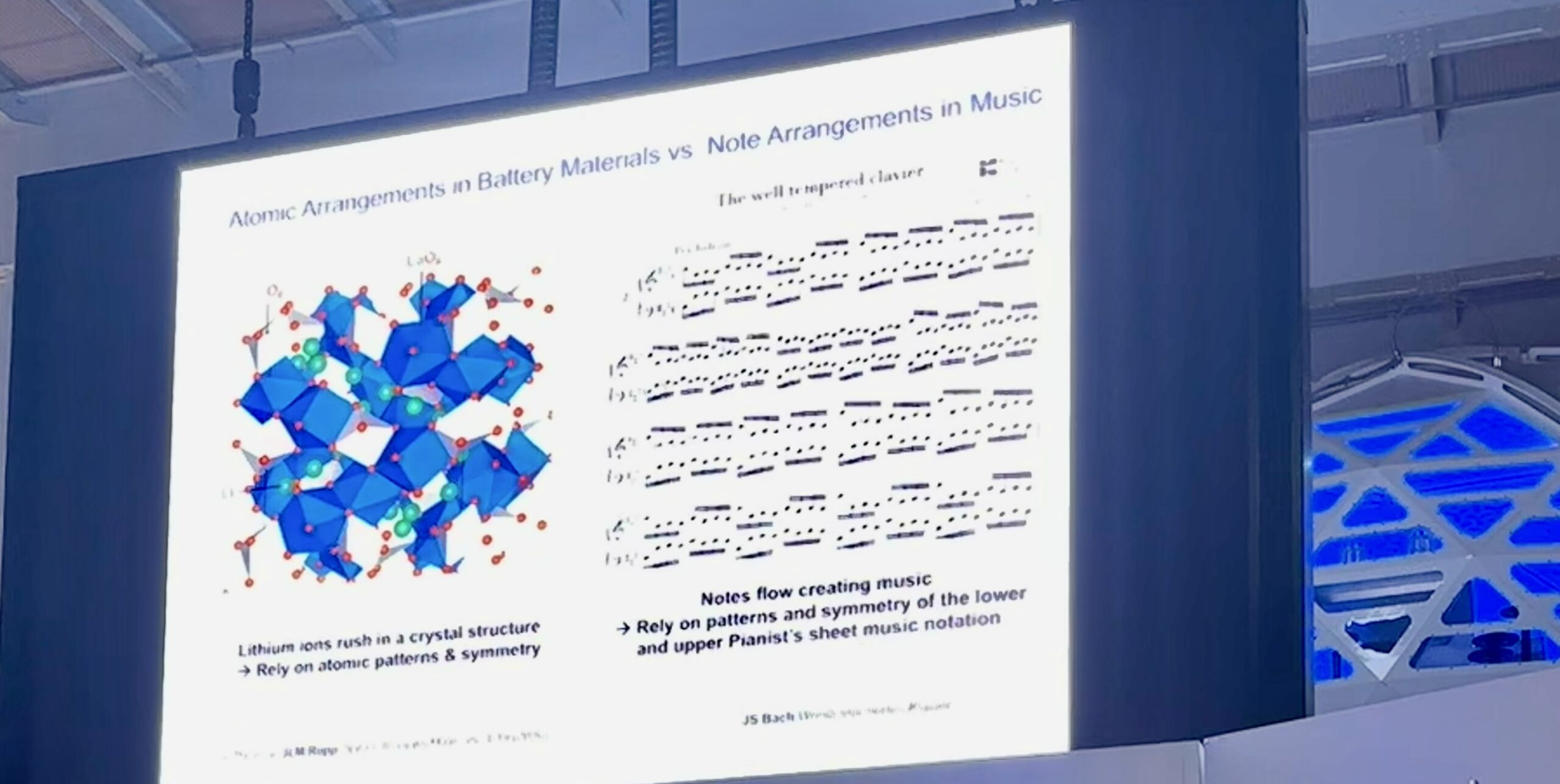
Jennifer Rupp not only explained how these energy storage technologies work and how innovative materials can help improve them. She also highlighted a fascinating connection: solid-state crystals exhibit structures and patterns that can be compared to musical notation. “Science and music have more in common than one might think at first. The movement of lithium ions through a solid depends critically on the atomic structure and symmetry of a crystal,” explained the chemist and passionate jazz pianist. Musical compositions, too, are built around recurring elements and principles of order – something clearly visible in the sheet music of Bach’s The Well-Tempered Clavier. There are also surprising parallels between research notebooks and musical sketches: quick, initially unfinished notes can spark ideas for new energy materials and innovative processes, just as Beethoven’s scribbled ideas eventually evolved into timeless masterpieces.
Between the scientific insights, Drum & Bow transported the audience into musical visions of the future with arrangements from film classics such as Dune and Star Wars. A particularly memorable moment came when the first violinist picked up a zither and used an electromagnet placed on the instrument to produce unexpectedly otherworldly sounds. Against the futuristic backdrop of the Deutsches Museum, the audience could almost imagine being transported to unknown worlds. As an encore, Drum & Bow performed the theme from Mission: Impossible. The e-conversion researchers would naturally beg to differ: through their research, they are helping turn the energy transition into a Mission Possible.
Further events are planned for February 10, 2027 (Studiosound II at the Deutsches Museum), April 14 at the Prinzregententheater, and July 7 at the Brunnenhof at the Munich Residenz. A special highlight will be the children’s concert on June 3, focusing on The Mysterious Composing Machine.
Photos: C. Zörlein / e-conversion