

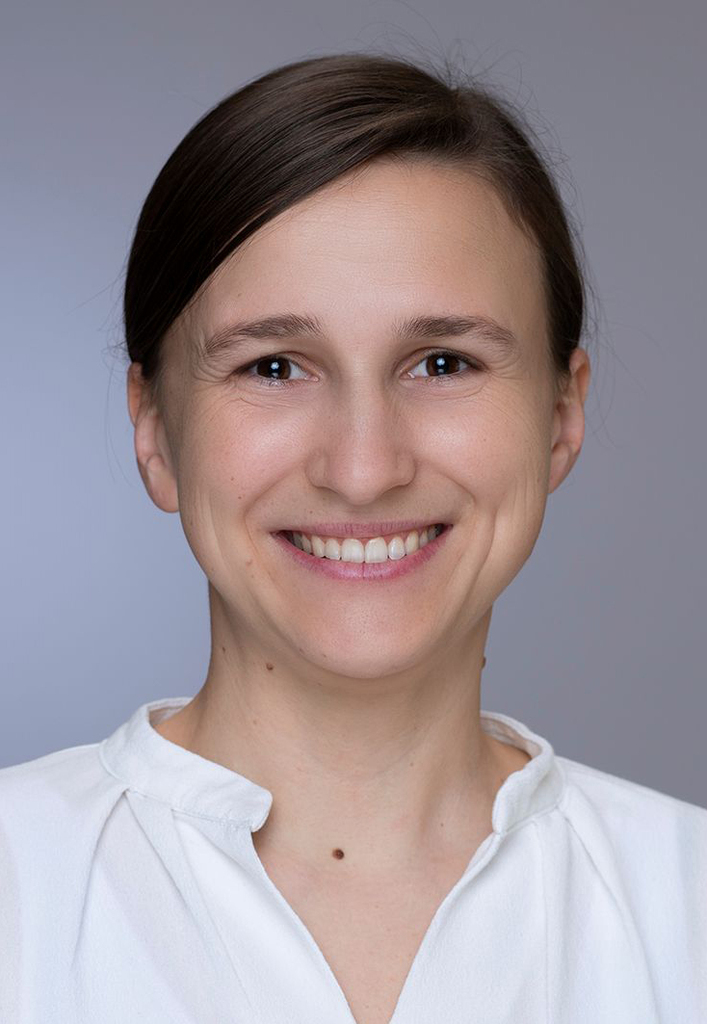
Dr. Verena Streibel
Understanding interfaces in energy conversion
What happens at a material surface when it is simultaneously exposed to light, electrical voltage, and a reactive environment? This is the central question driving Dr. Verena Streibel's research. Her goal is to observe and understand the chemical and electronic changes occurring at interfaces under realistic reaction conditions, and to reveal how these changes determine the activity, selectivity, and stability of materials used for energy conversion.
Verena Streibel studied Materials Science at TU Darmstadt and earned her PhD in 2016 at the Fritz Haber Institute of the Max Planck Society. She then joined the SUNCAT Center for Interface Science and Catalysis at Stanford University as a postdoctoral researcher, where she focused on theoretical modeling. Since 2021, she has been conducting research at the Walter Schottky Institute of the Technical University of Munich (TUM). In 2024, she became head of a BMFTR-funded junior research group dedicated to developing complex materials for artificial photosynthesis.
The focus of Verena Streibel's research is on dynamic interfaces in electrochemical and light-driven processes. Within e-conversion, she contributes unique expertise in analyzing operating interfaces using ambient-pressure X-ray photoelectron spectroscopy (AP-XPS) under illumination, applied voltage, and reactive environments. Her work helps uncover fundamental relationships between interface dynamics and material functionality, providing new insights for the development of stable and efficient energy conversion systems.
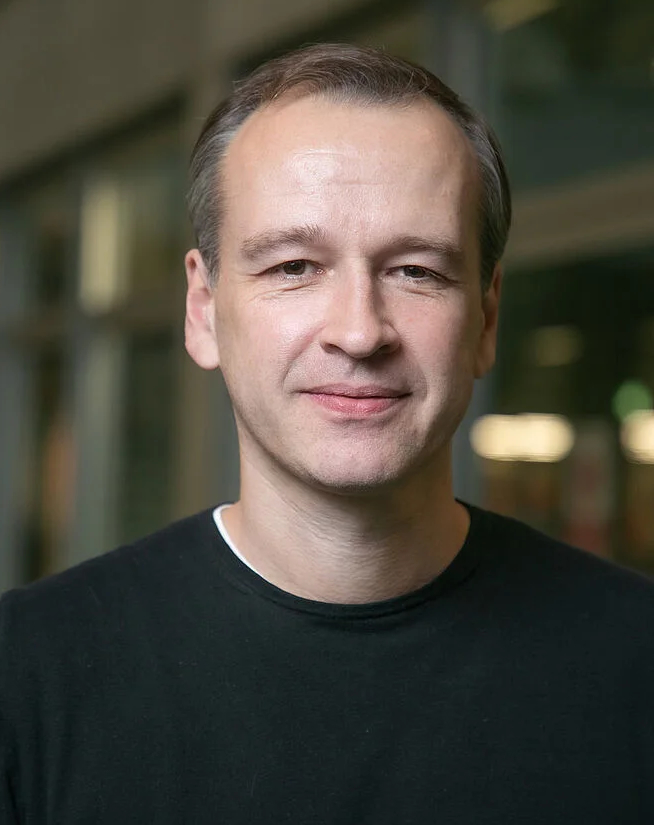
Prof. Arne Thomas (Photo: Christian Kielmann)
Unlocking the potential of nanoporous materials
Nanoporous materials offer unique opportunities for catalysis and energy conversion thanks to their exceptionally large internal surface area, which provides abundant sites for chemical reactions. Prof. Arne Thomas's research focuses on covalent organic frameworks (COFs) and microporous polymers. Their performance depends critically on the precise control of their structural properties and surface chemistry.
Arne Thomas studied chemistry in Giessen, Marburg, and Edinburgh, and earned his PhD in 2004 under the supervision of Prof. Markus Antonietti at the Max Planck Institute of Colloids and Interfaces. Following an Alexander von Humboldt postdoctoral fellowship with Prof. Galen D. Stucky at the University of California, Santa Barbara, he returned to the Max Planck Institute in 2005 as a research group leader. In 2009, he was appointed professor at TU Berlin, where he established an internationally recognized research program on porous and nanostructured materials. Since 2026, Prof. Arne Thomas has been Professor of Macromolecular Chemistry at the Technical University of Munich (TUM).
A central aspect of his work is the integration of functional molecular units directly into the framework of materials, creating new catalytic reaction pathways. Together with his research group, he develops hybrid and composite materials, for example by incorporating biocatalysts as metal-free alternatives or by combining organic frameworks with inorganic nanomaterials. These approaches open up new possibilities for designing efficient and sustainable materials for catalytic and energy-conversion applications.
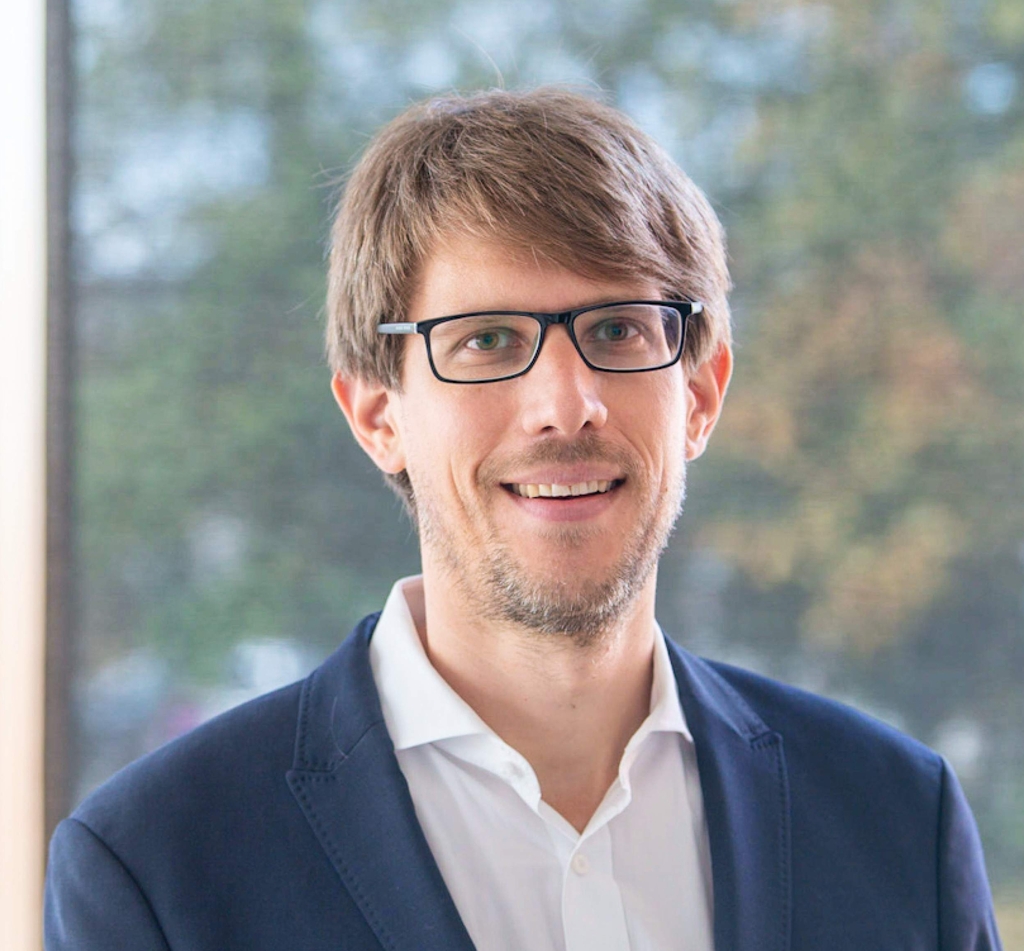
Prof. Marc Ledendecker
Catalysts for a sustainable energy economy
A high-performance catalyst must do more than efficiently drive a chemical reaction: it must also remain stable under demanding operating conditions. This is precisely where the research of Prof. Marc Ledendecker comes in. He develops nanostructured catalysts and investigates how their activity and stability can be systematically improved, with the goal of making electrochemical processes for sustainable energy supply more efficient and resource-efficient.
Since 2022, Marc Ledendecker has been Professor of Sustainable Energy Materials at the Technical University of Munich (TUM) while also leading the Helmholtz Young Investigator Group "Novel Catalyst Design" at the Helmholtz Institute Erlangen-Nürnberg. After studying chemistry at Friedrich-Alexander University Erlangen-Nürnberg, he earned his PhD in Materials Science in 2016 at the Max Planck Institute of Colloids and Interfaces. He subsequently continued his research at the Max Planck Institute for Iron Research and at the University of California, Berkeley.
Ledendecker's research focuses on catalysts for water electrolysis, CO₂ reduction, and the sustainable production of hydrogen peroxide, examining their behavior under real operating conditions. A key objective is to understand why catalyst performance declines over time. Another major area of his work is data-driven and increasingly automated materials research, which aims to accelerate and systematize the discovery and optimization of promising catalyst materials. Through these efforts, he contributes to the development of more durable and efficient catalytic systems for future sustainable energy technologies.