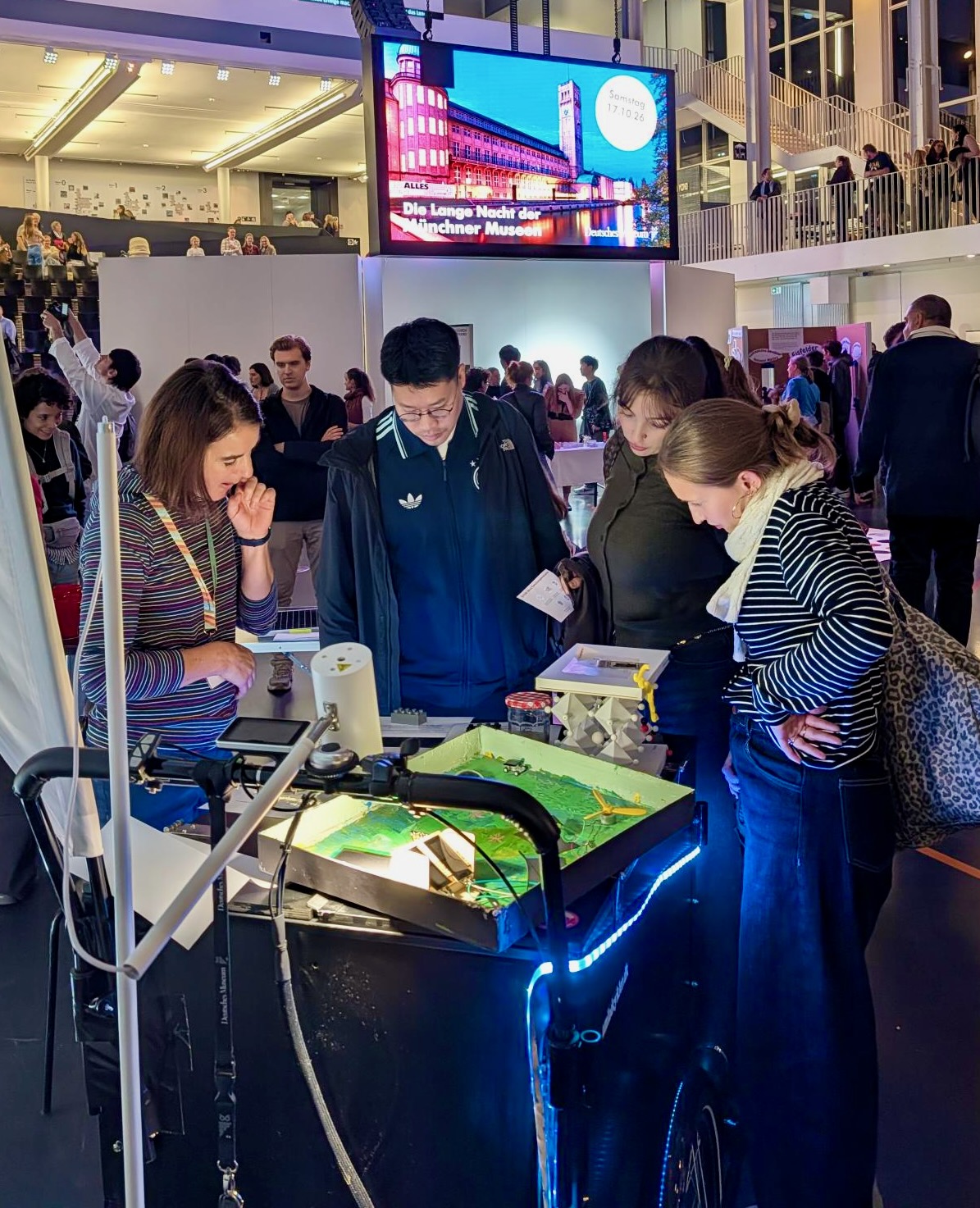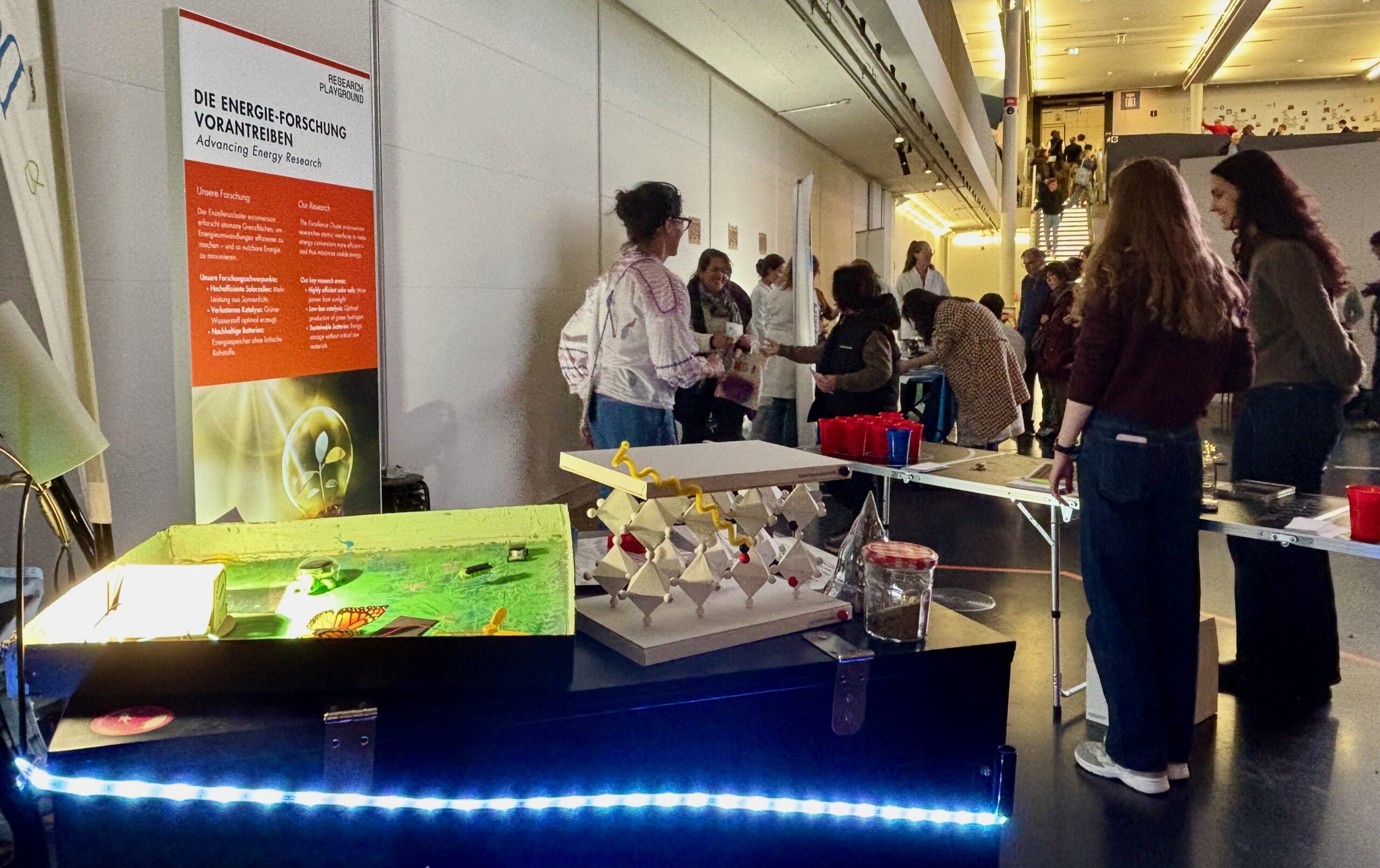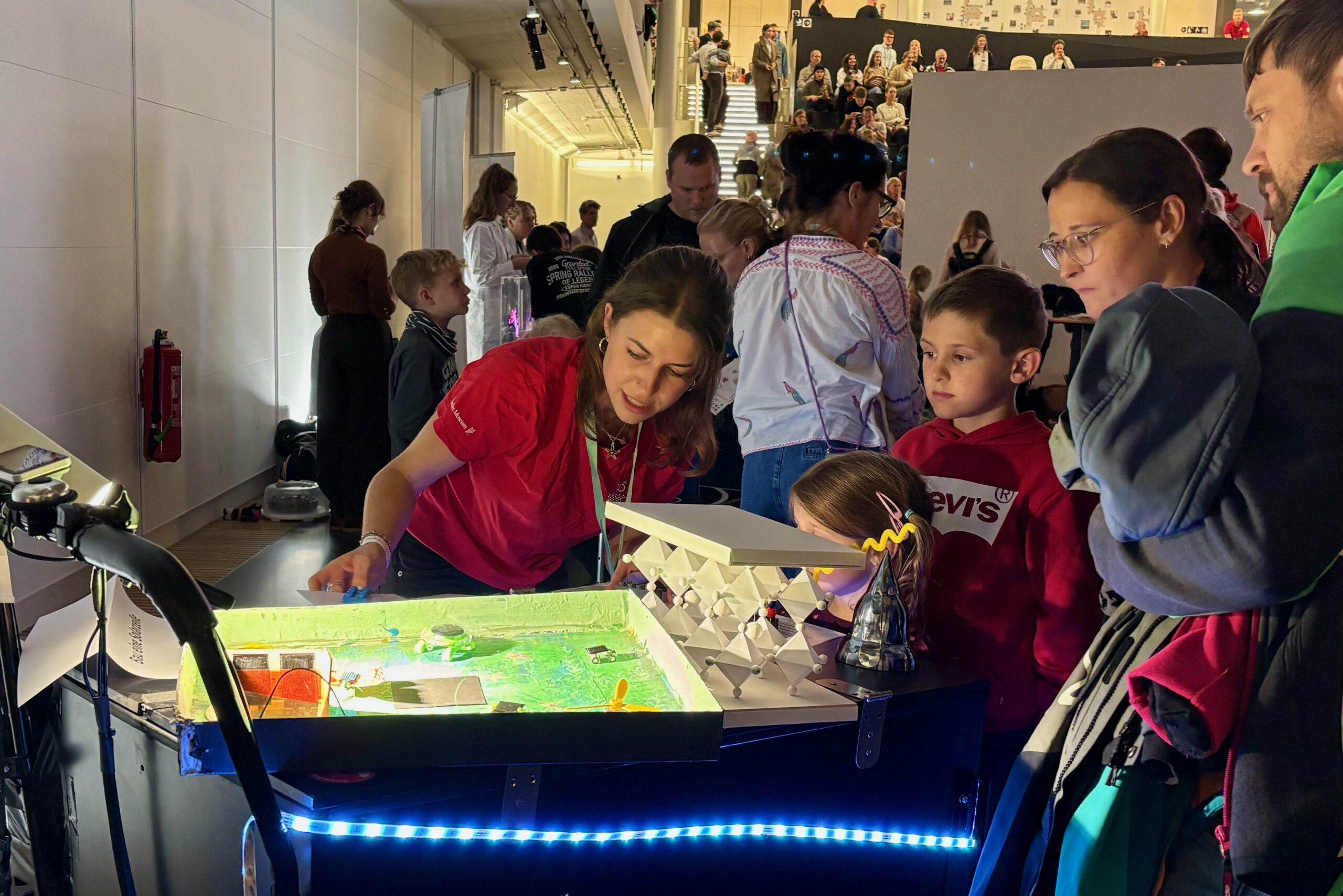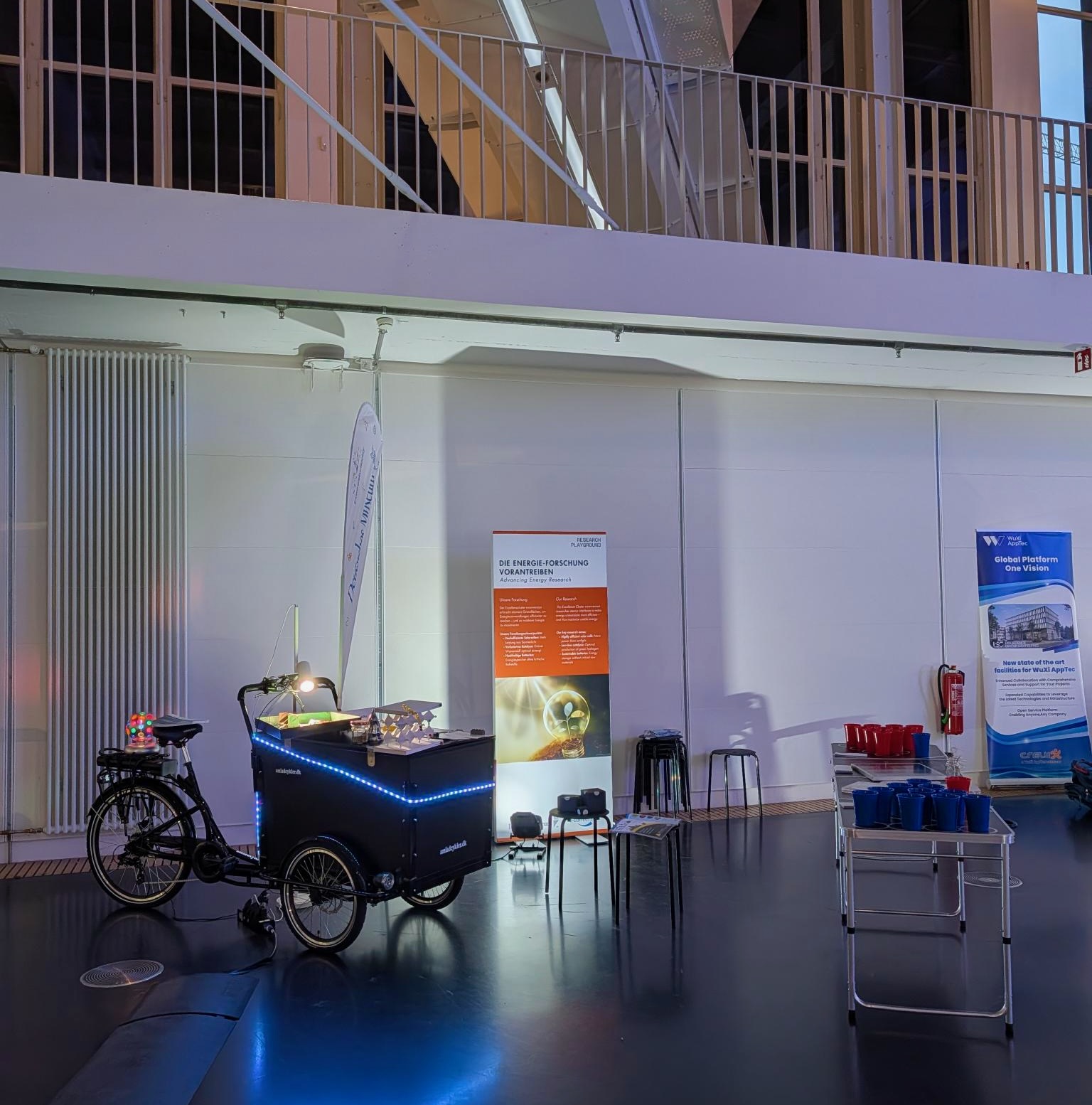

Sending photons on their journey, exploring the Solar Zoo, or discovering what makes tandem solar cells special: at the Long Night of Munich Museums on 17 October at the Deutsches Museum, everything at the e-conversion booth revolved around solar energy. Together with other Munich Clusters of Excellence, the Research Playground became a place for discovery, hands-on experimentation, and playful learning, giving visitors insights into research on sustainable energy technologies.
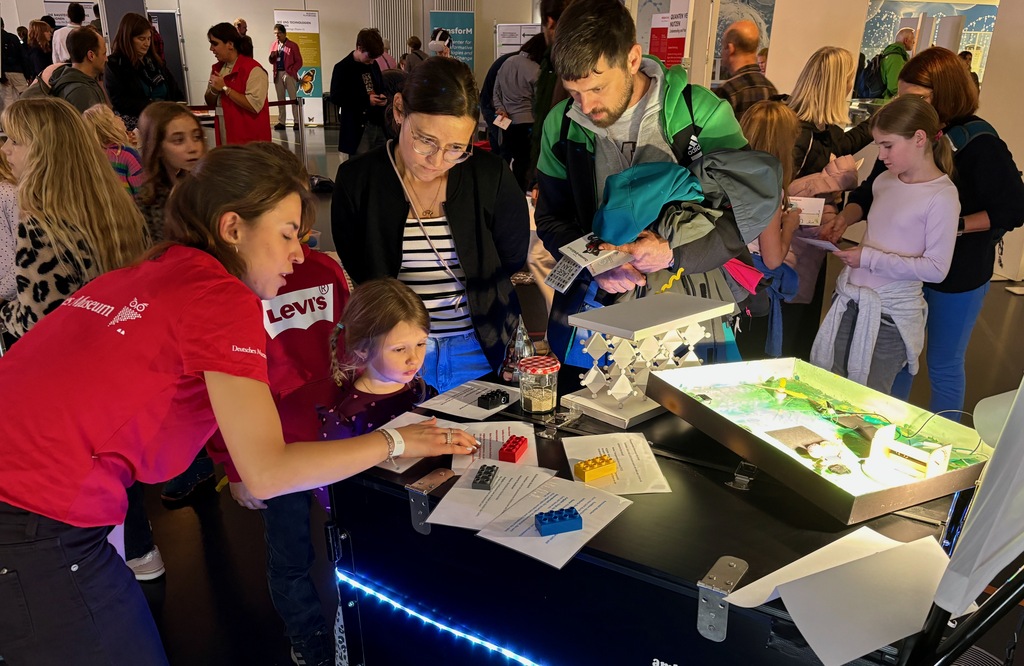
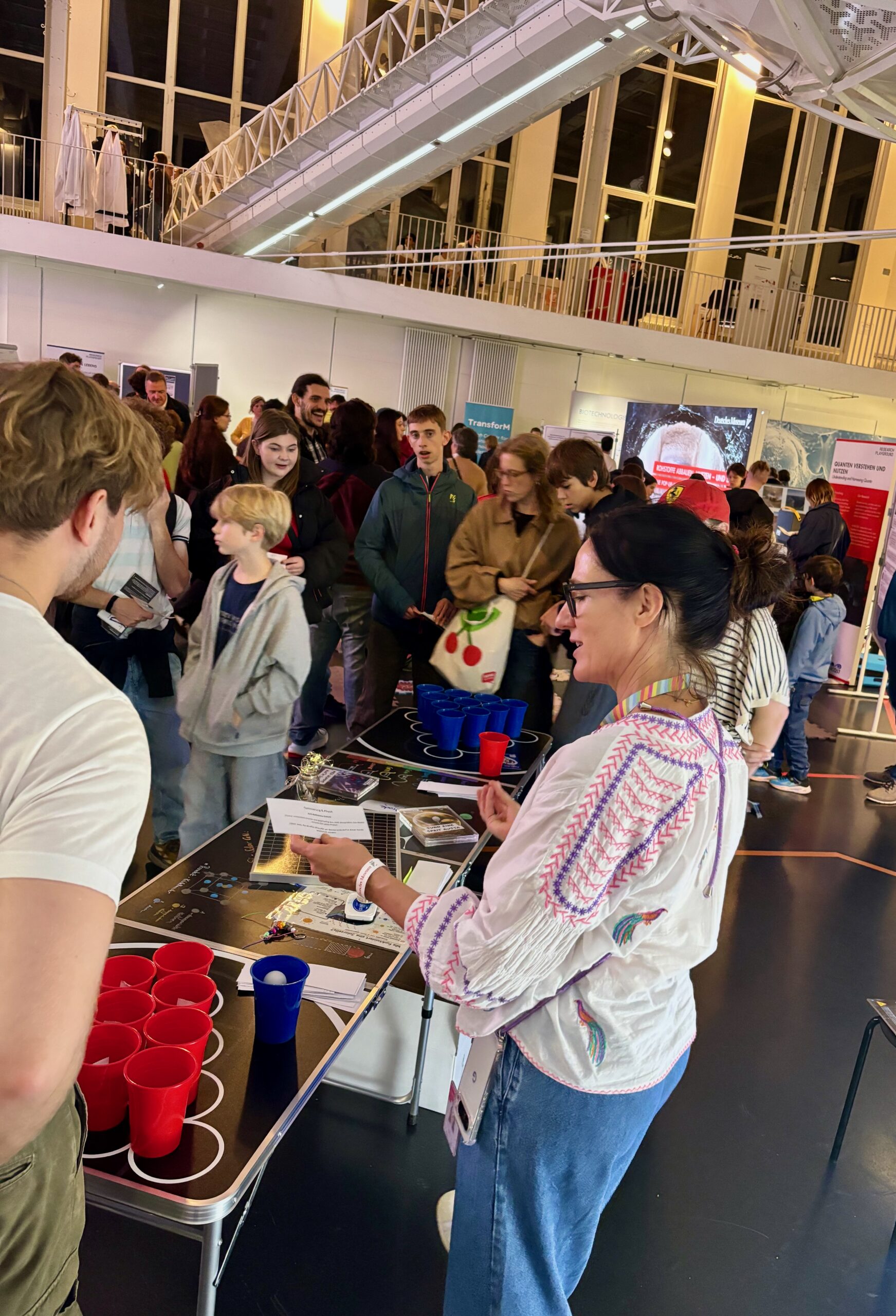
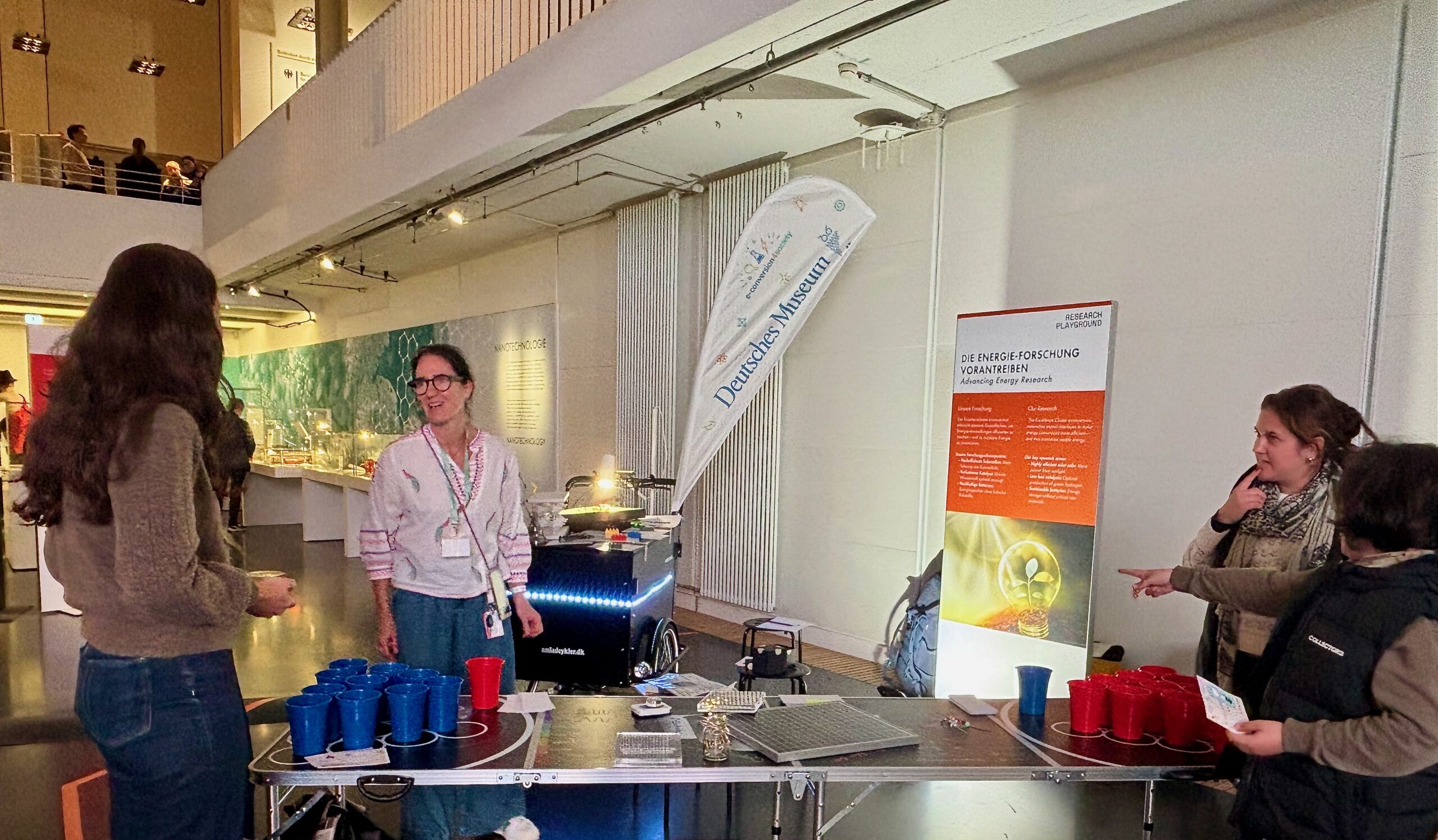
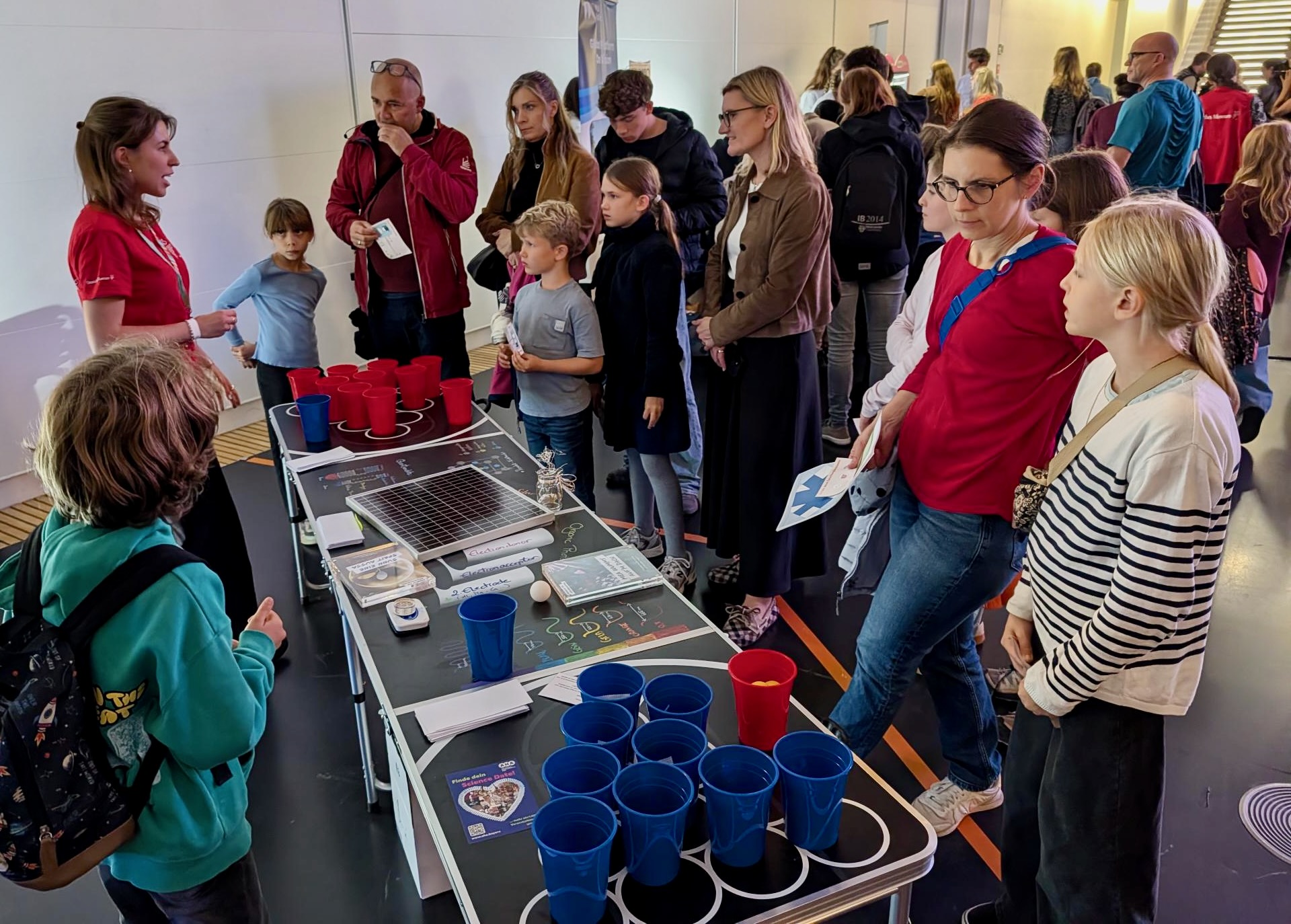
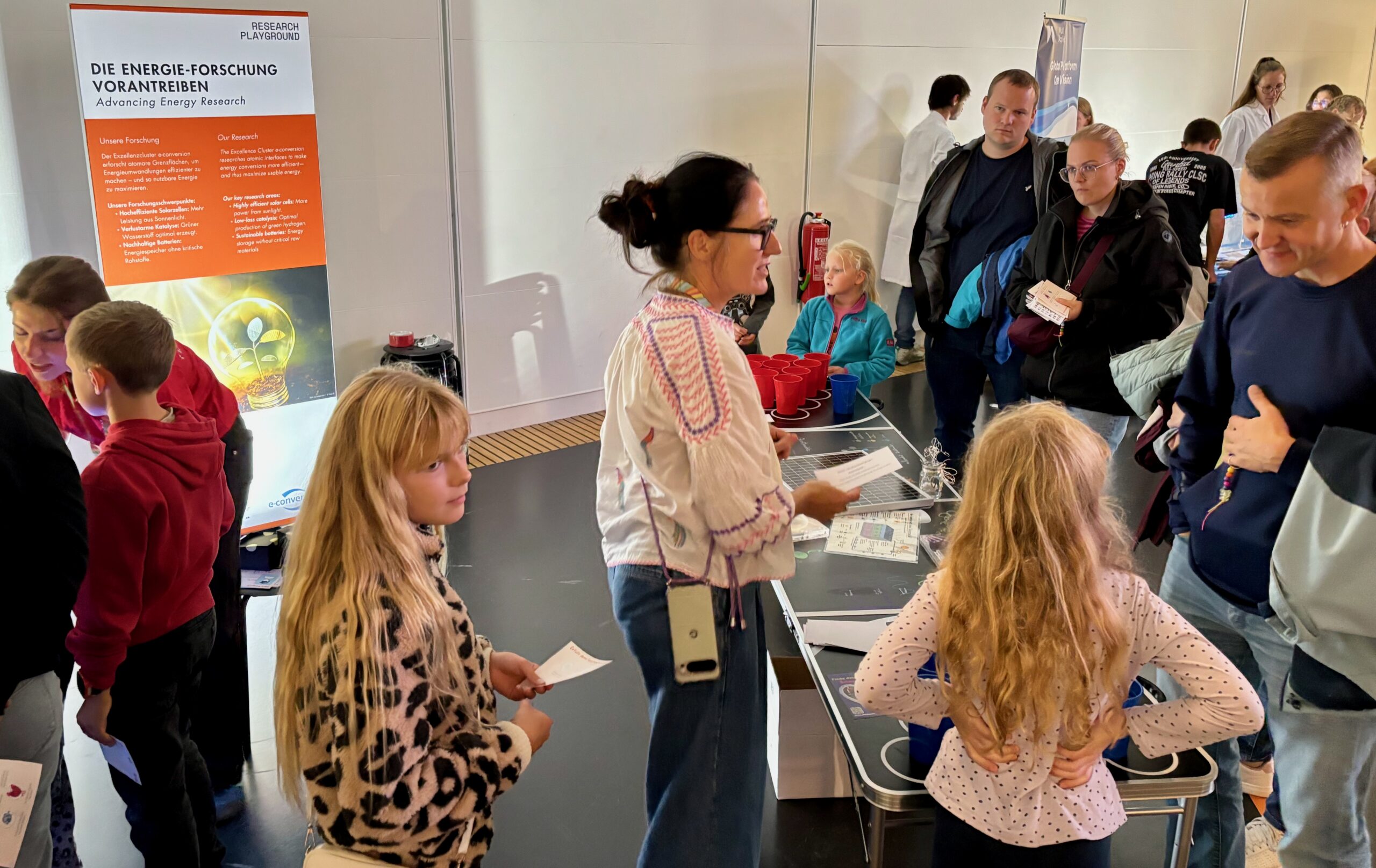
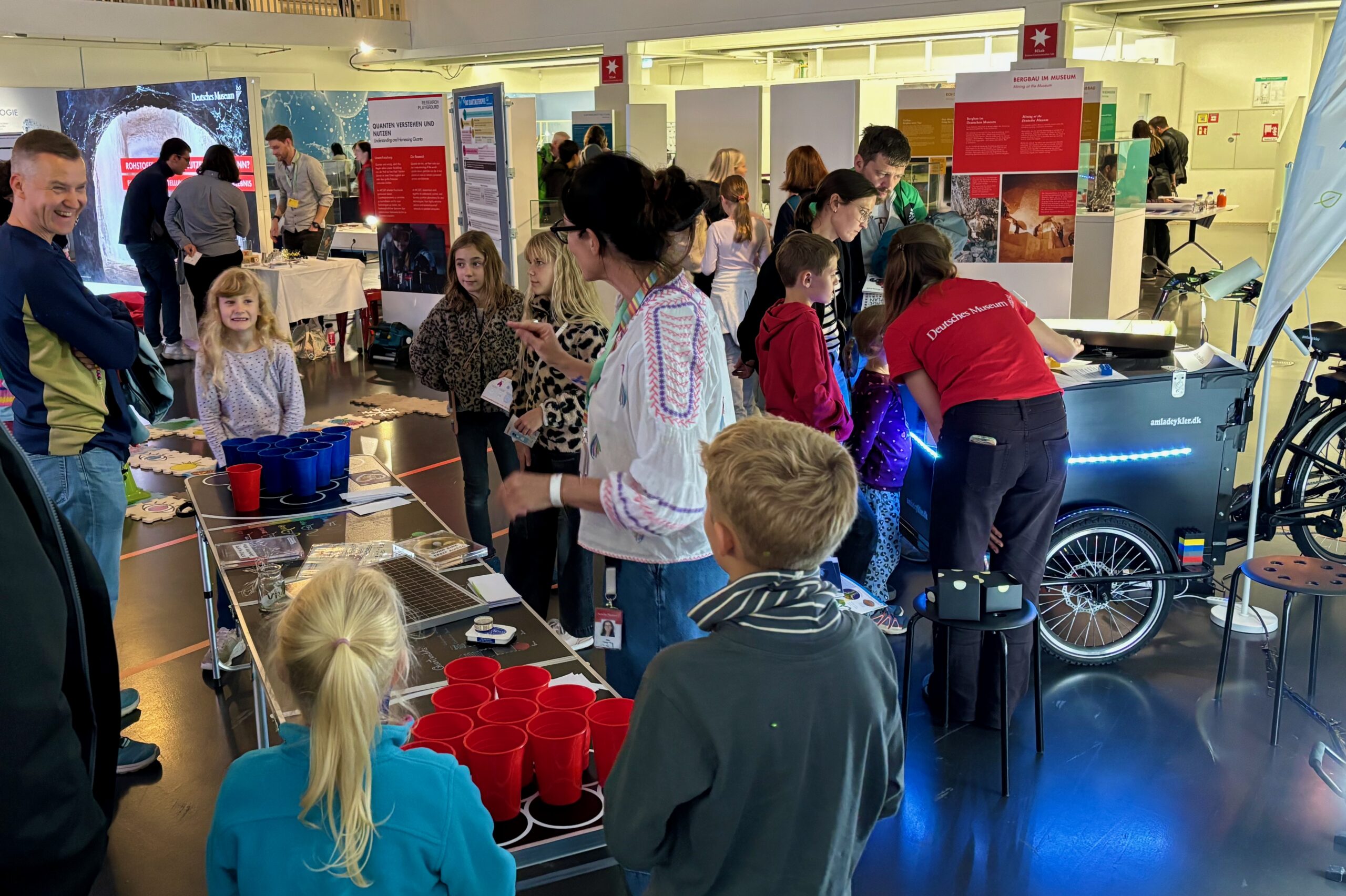
How does a solar cell actually work? And which materials could shape the photovoltaics of the future? Visitors found answers to these questions at the e-conversion booth in the Deutsches Museum. (Photo: C. Zörlein/e-conversion)
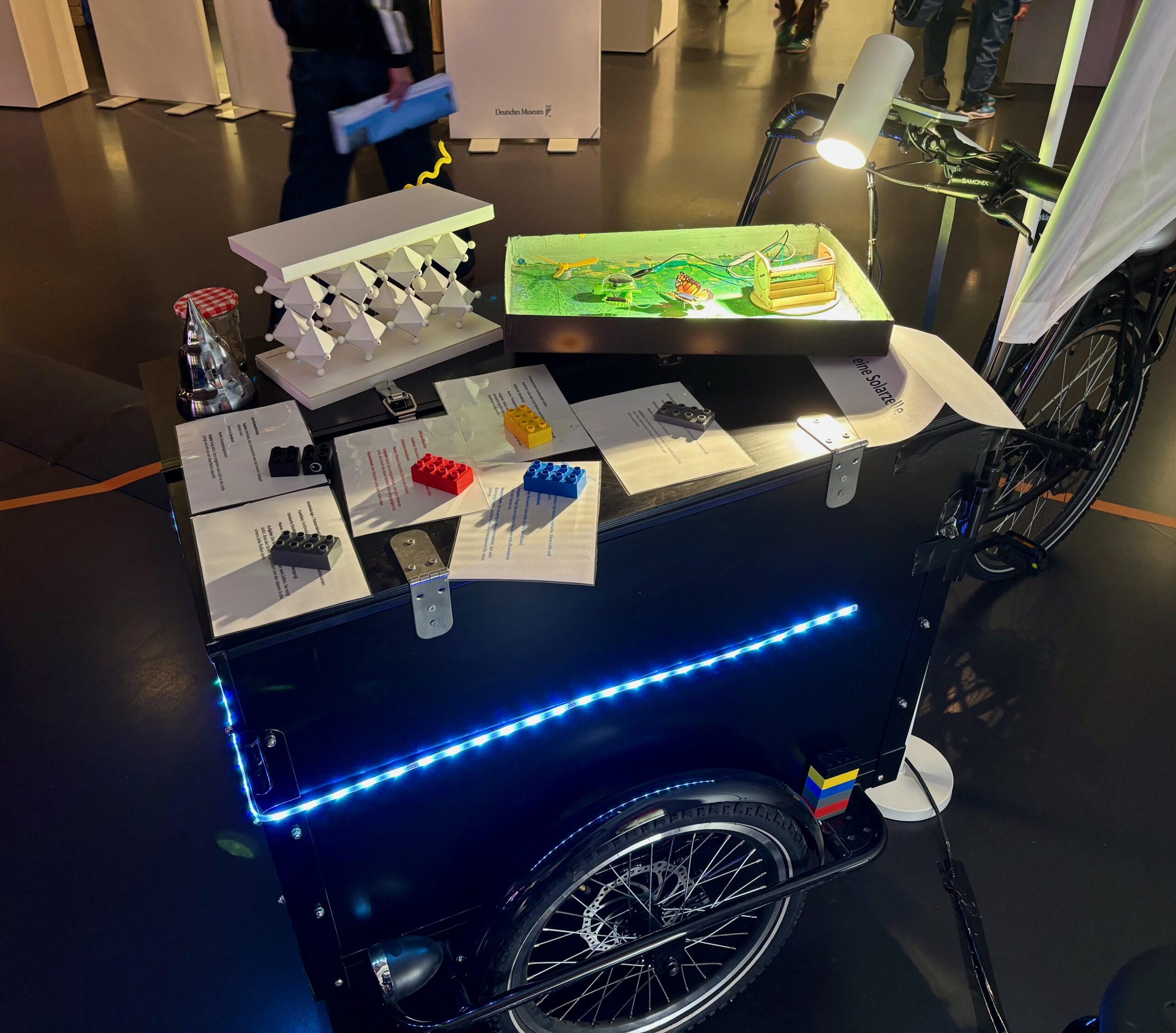
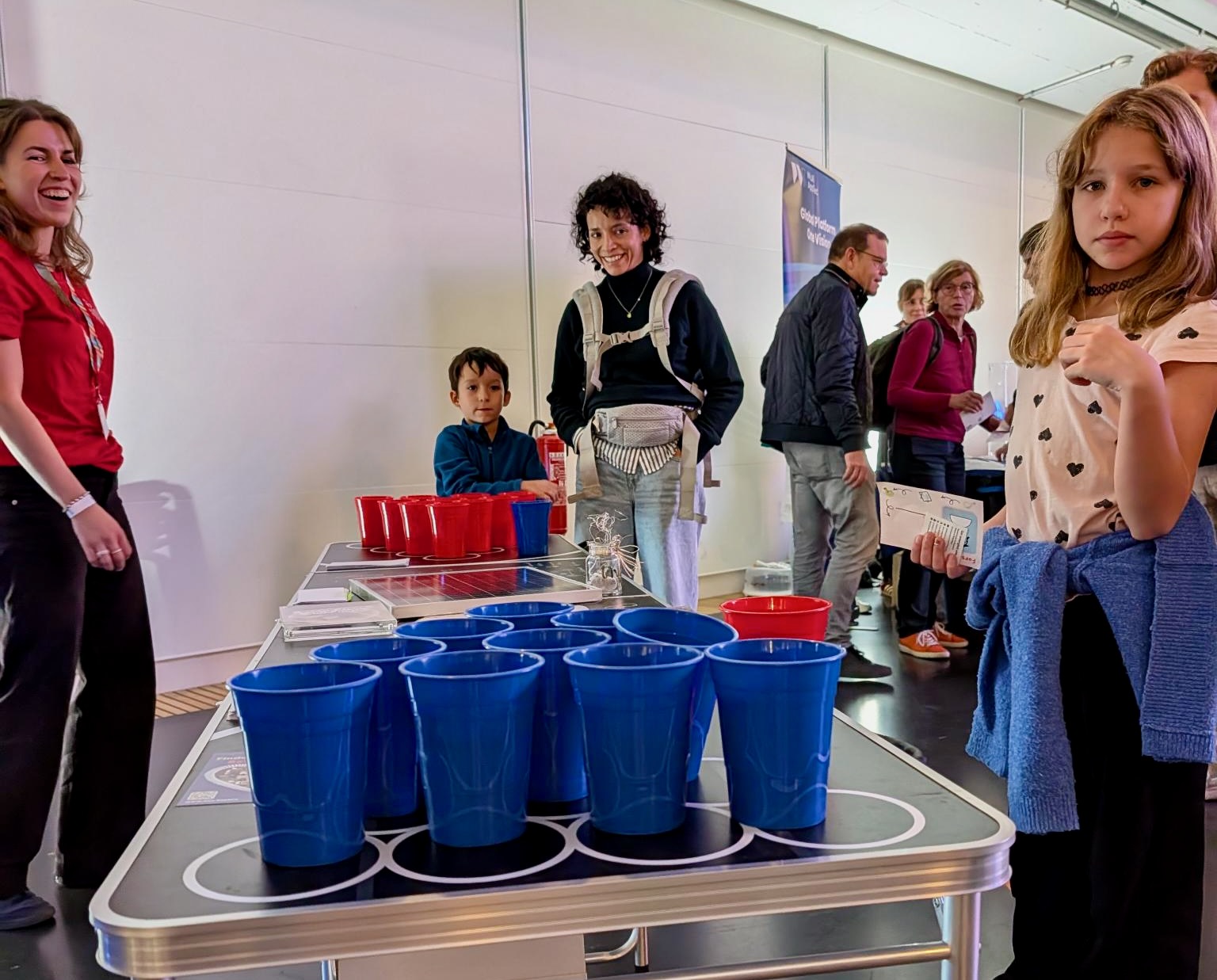
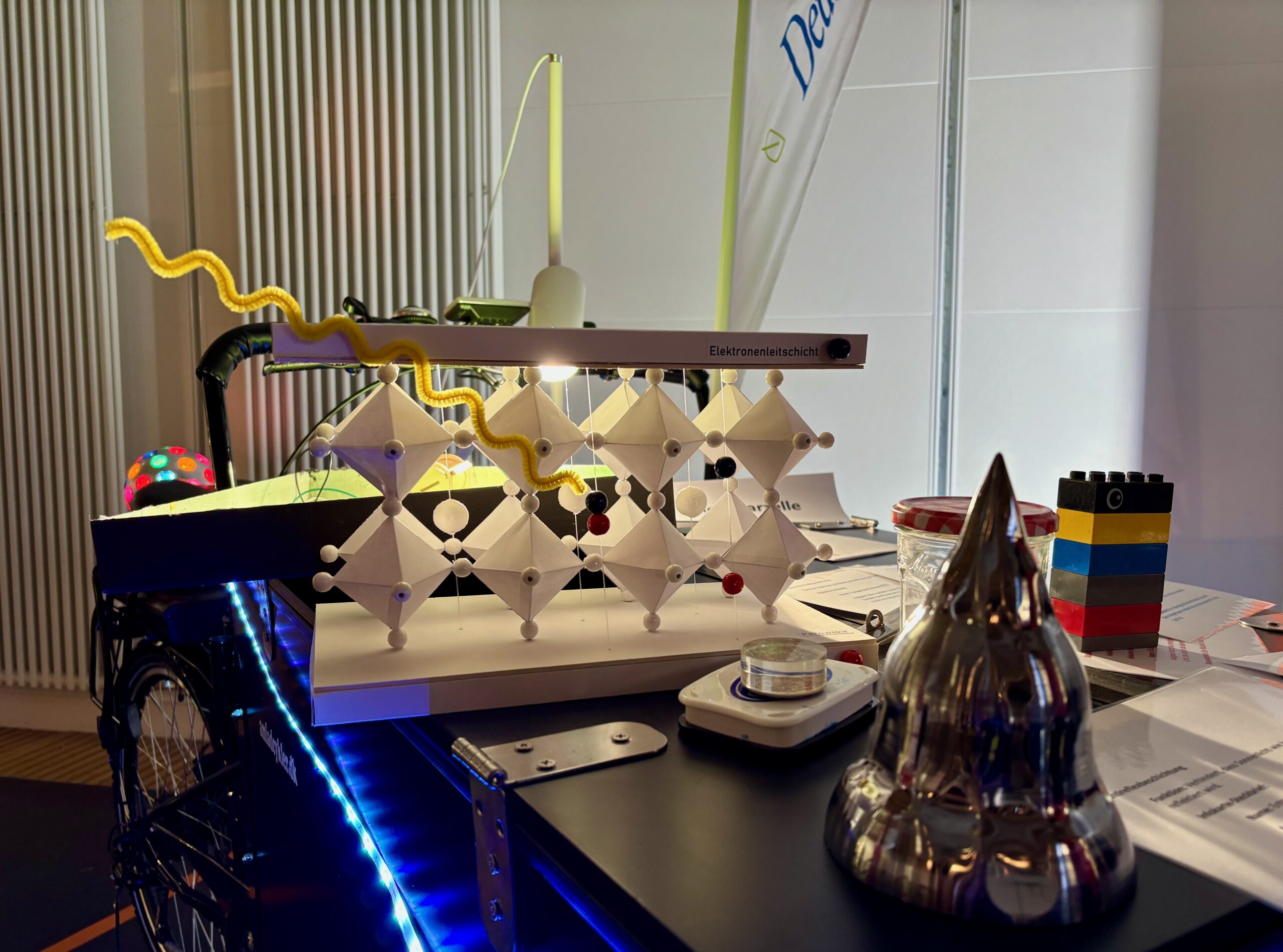
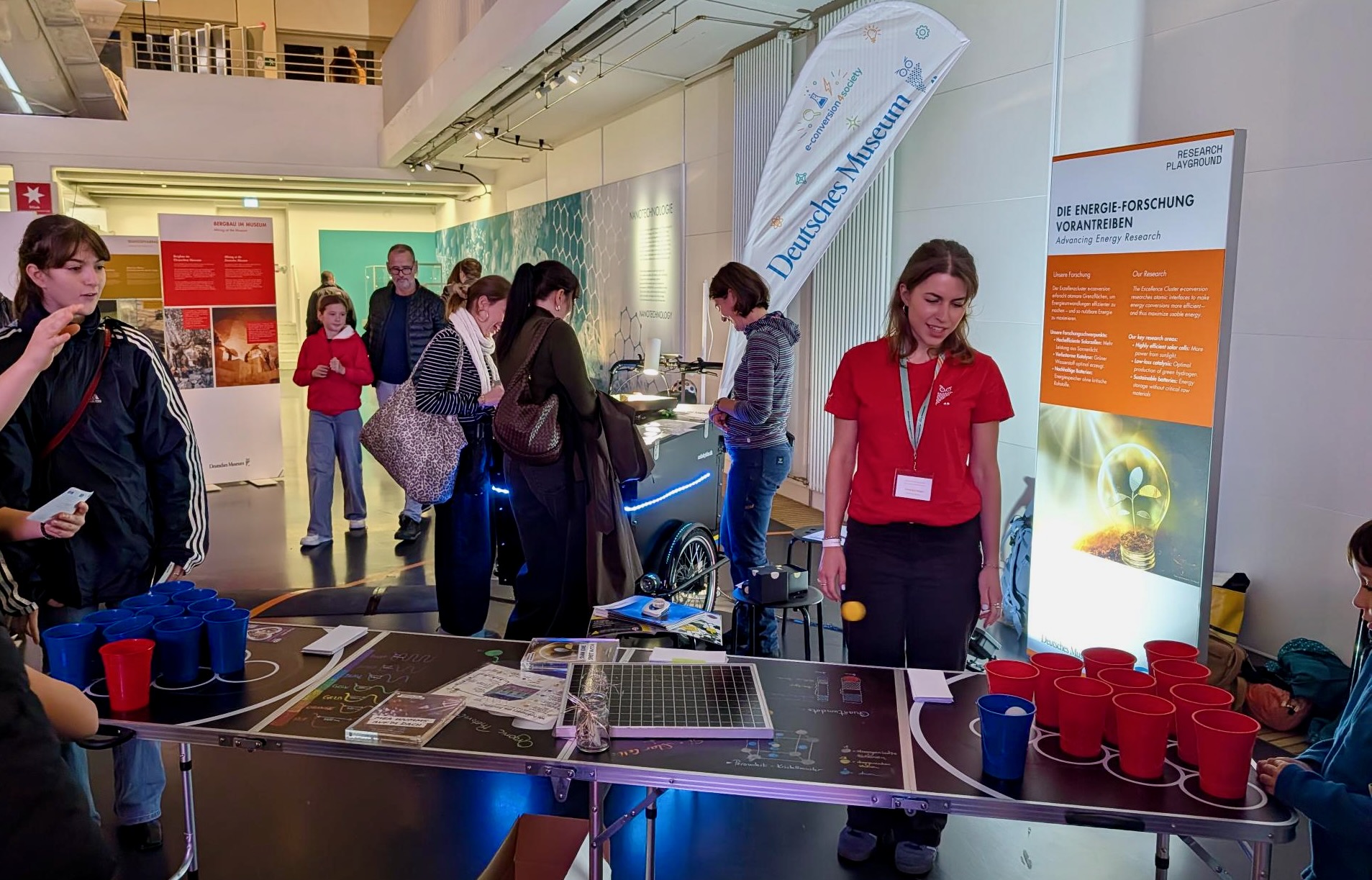
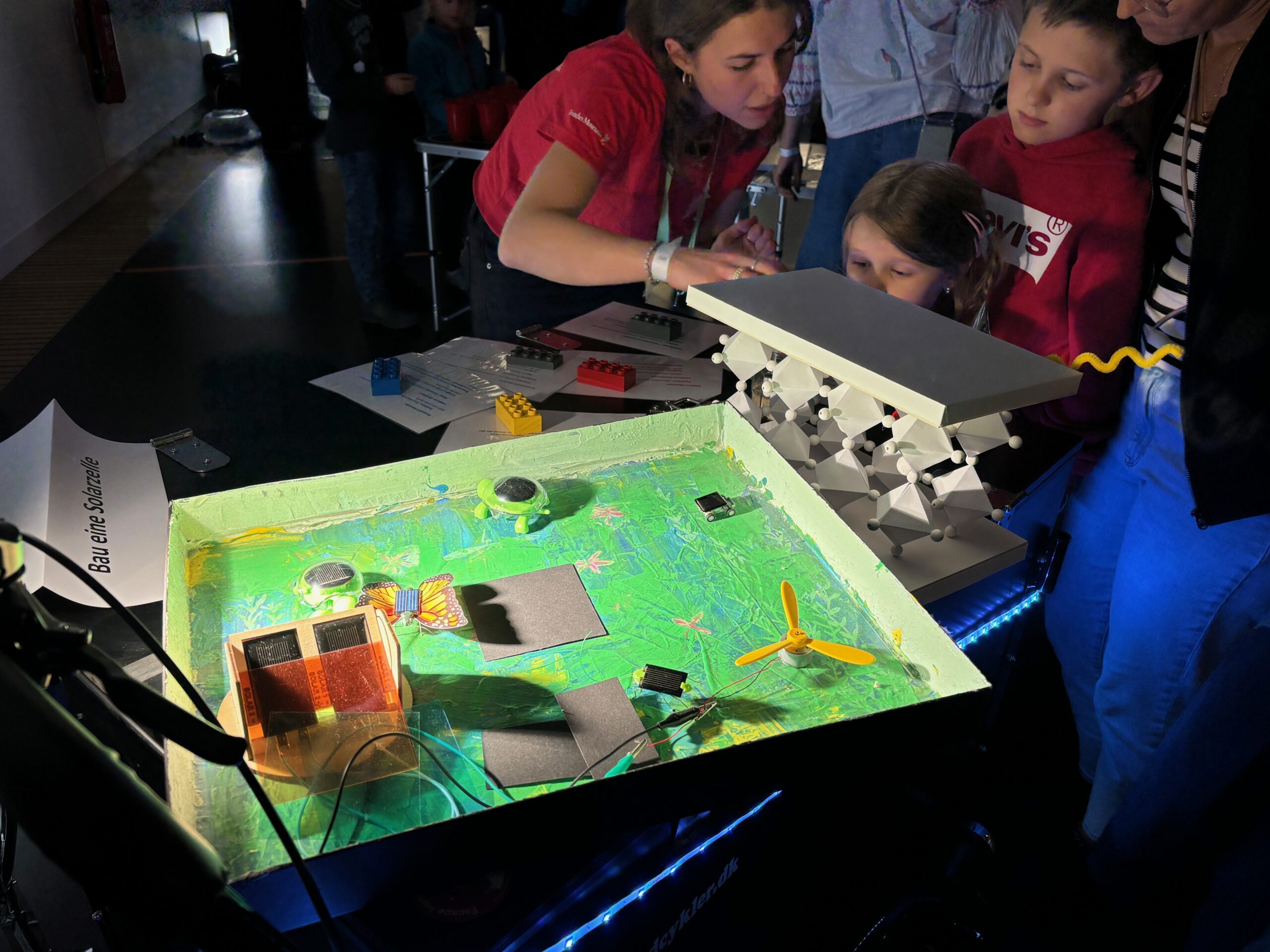
At the “Solar Pong” station, visitors learned in an interactive way how photons are connected to solar energy and which factors can positively or negatively influence the performance of solar cells. Using Lego bricks, they could recreate the structure of tandem solar cells, while another exhibit illustrated the chemical structure of innovative energy materials known as perovskites. Equipped with a powerful light source, visitors could bring different “animals” in the Solar Zoo to life, demonstrating how light can be converted into electrical and mechanical energy.
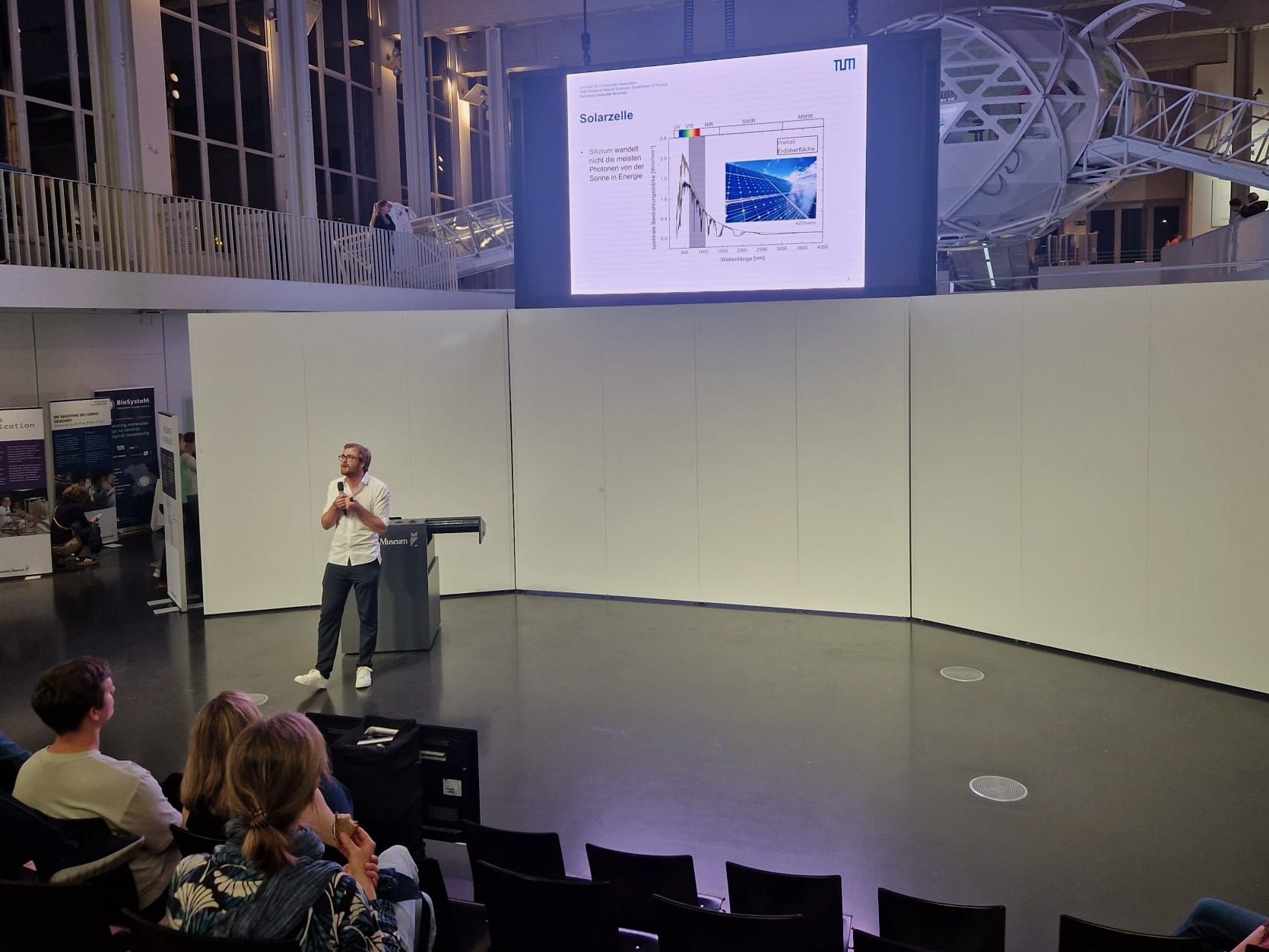
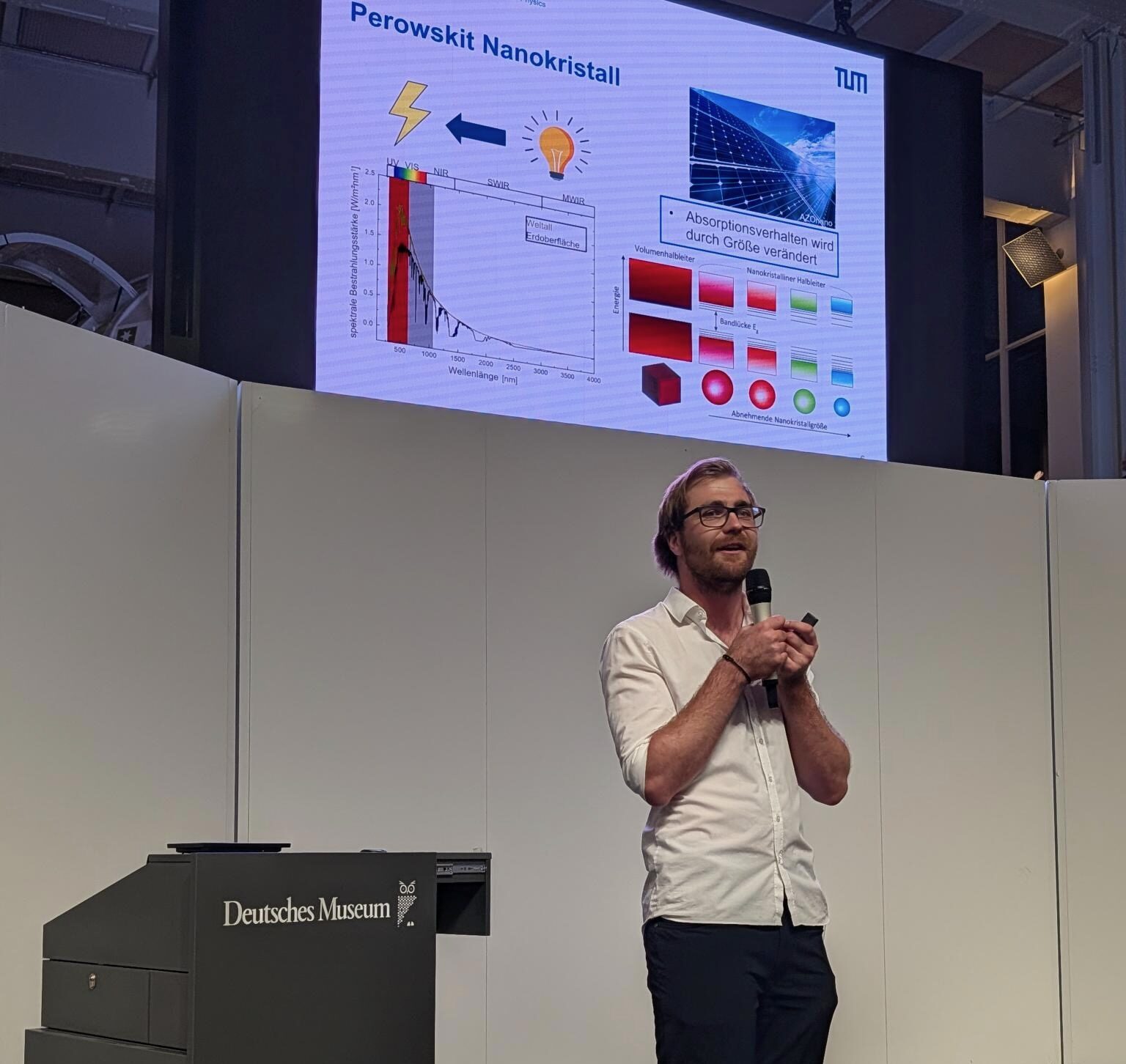
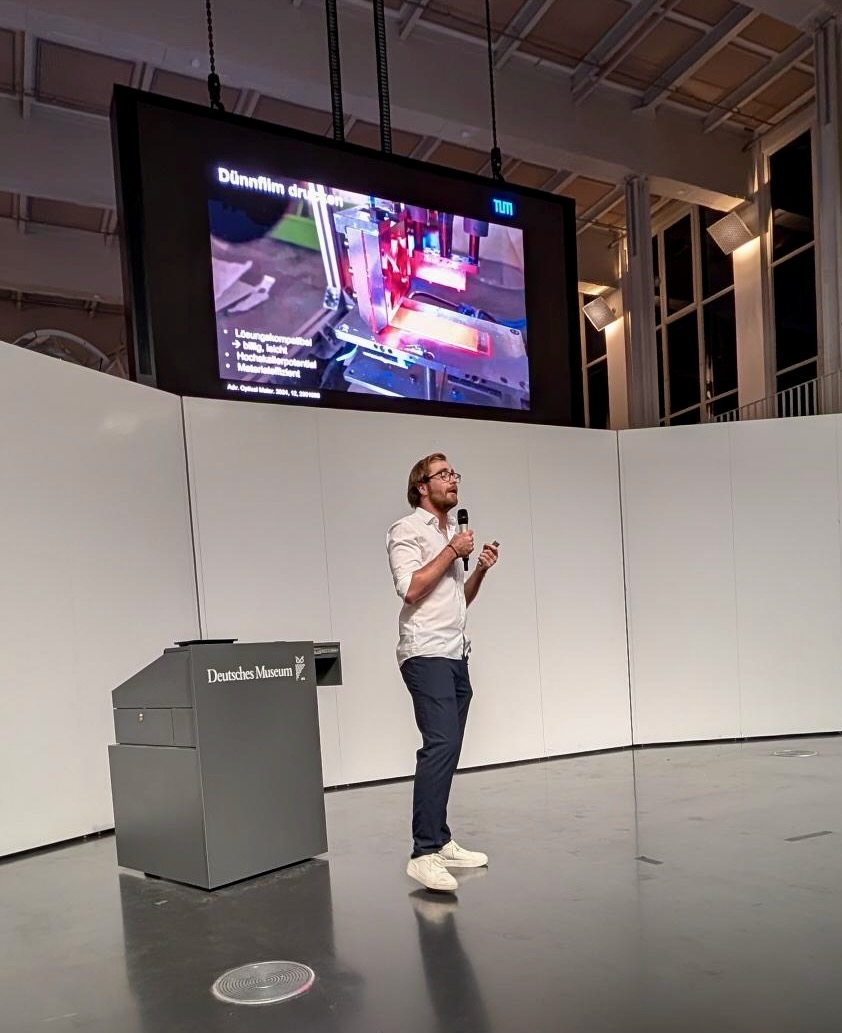
A particular highlight was the public lecture by early-career researcher Thomas Baier, a doctoral student at TUM in the group of Prof. Peter Müller-Buschbaum, who investigates new materials for solar cells. In his talk, “Tiny Crystals, Big Impact,” he explained how perovskite nanocrystals could shape the future of solar energy. “It was a great opportunity to present my research as part of the Long Night of Munich Museums and to share my enthusiasm for nanomaterials,” says Thomas Baier. “Explaining complex scientific concepts without getting lost in technical details is not always easy, but it is a very rewarding experience. For me, science communication has become an important part of research: making science accessible, fostering curiosity, and sharing research with society helps spark interest in the science behind future energy technologies.”
We would like to thank everyone who contributed behind the scenes and helped bring this event to life, as well as all visitors for their great interest, thoughtful questions, and many inspiring conversations.
Impressions from 17 Oktober 2026